Your liver depends on glutathione for protection against toxins, free radicals, and oxidative stress. This tripeptide consists of three amino acids: glutamine, glycine, and cysteine. These amino acids work together to defend liver cells and support the detoxification processes your body runs constantly.
How Glutathione Impacts Liver Detox Pathways
Every day, your liver filters compounds from your blood, including environmental pollutants, alcohol, medications, and processed food byproducts. Glutathione helps your body handle that load by binding to certain toxins and helping convert them into forms your body can eliminate. Researchers often connect this process to Phase II detoxification, where the liver neutralizes and clears compounds that could otherwise linger and cause damage.
Evidence suggests orally administered glutathione may support hepatic metabolism and improve markers tied to nonalcoholic fatty liver disease (Honda et al., 2017). That matters for anyone tracking liver enzyme levels with routine lab work or looking for natural liver support strategies.
Why Delivery Methods Determine Results
Absorption becomes the deciding factor with glutathione supplements. Research suggests orally administered glutathione can be absorbed into the blood, with protein-bound glutathione levels rising within 1–2 hours after ingestion (Honda et al., 2017). Other findings suggest that oral glutathione may also act as a source of amino acids that the body can use to synthesize its own endogenous glutathione, offering another valuable pathway.
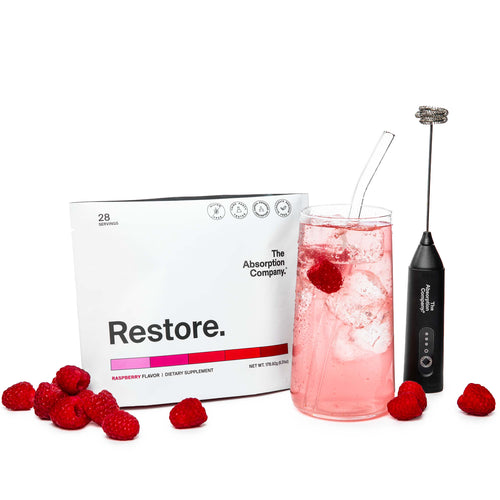
Glutathione is widely recognized as having bioavailability challenges. That's why delivery systems matter. The Absorption Company's Restore uses a liposomal approach that pairs glutathione with a protective fat-based layer designed to help more of the active ingredient make it through digestion. This aligns with long-term liver support goals and ensures the glutathione you take actually reaches your system.
How Glutathione Powers Natural Detox Pathways
Your liver's natural cleanup process depends on glutathione at multiple stages. Understanding how glutathione supports the liver's two-phase detoxification process clarifies why this nutrient matters for liver health.
During Phase I, your liver deploys enzymes called cytochrome P450s. In this step, compounds from food byproducts, alcohol, and environmental exposures get broken down into more reactive particles. Glutathione helps the body stay steady through this transition.
Phase II involves conjugation, where the liver makes compounds more water-soluble so the body can clear them through bile or urine. Glutathione supports this step by binding to certain compounds so they can move out more safely. Low glutathione can leave the liver doing heavier work with fewer resources, which may connect to oxidative stress and a sluggish feeling over time.
Stress, nutrient gaps, intense training cycles, and everyday environmental load can all contribute to depleted glutathione levels. For people focused on wellness and liver support, maintaining healthy glutathione status can help the body keep detox pathways running smoothly.
Glutathione supports more than detox pathways. Studies tie it to T-cell function and immune regulation, which may influence inflammatory patterns in certain conditions (Klihada, 2023). For that reason, glutathione often appears in wellness conversations that reach beyond liver health alone.
Our Restore supplement pairs liposomal glutathione with vitamin C for nutrient synergy. Glutathione and vitamin C work together to boost antioxidant defense, enhancing cellular protection and reducing oxidative stress. Most supplements waste nutrients through poor absorption. We formulate with pharmaceutical-grade absorption technology so you actually get the benefits.
Liver Conditions That May Benefit from Gluthathione Support
Glutathione may support the liver under several conditions where oxidative stress and detox capacity become concerns.
Non-Alcoholic Fatty Liver Disease
Non-alcoholic fatty liver disease occurs when fat builds up in liver cells, often due to poor diet, sedentary lifestyle, or metabolic issues. Fatty liver is usually silent, showing no symptoms until significant changes occur. Research suggests that supporting glutathione levels in the body may help reduce liver fat, improve liver enzyme markers, and support the progression management of NAFLD.
Liver Detoxification Support
Your liver works continuously to remove toxins, pollutants, and excess hormones. This process creates free radicals that can affect liver health. Glutathione helps neutralize these byproducts, supporting the liver's ability to recover and function smoothly. Without adequate glutathione, the liver's detoxifying capabilities can feel sluggish, which may contribute to fatigue and slower metabolism.
For people looking to pair glutathione with a targeted wellness routine, exploring our Restore supplement for comprehensive liver support can be a helpful next step. Restore combines liposomal glutathione with vitamin C, CoQ10, B vitamins, and electrolytes to create a complete daily foundation for cellular health and detoxification.
Hepatitis and Inflammation Support
Both chronic and acute liver inflammation can deplete the body's natural pool of glutathione. Without adequate levels of this antioxidant, inflammation patterns can persist and liver cells may experience increased oxidative stress. Multiple studies point to a role for glutathione supplementation in supporting oxidative stress balance and helping the body manage inflammatory responses in hepatitis patients.
Toxin Exposure and Everyday Stressors
Whether it's alcohol, environmental toxins, or certain medications, your liver handles the bulk of your body's detox duties. Every day, these stressors can chip away at glutathione reserves. Supporting glutathione levels may help build better resilience in the face of daily toxin exposure.
Food Sources That Support Natural Gluthione Production
Adding glutathione-friendly foods can support liver health without overhauling your entire routine. A few strategic staples can give the body more of the nutrients and building blocks tied to glutathione production and activity.
- Leafy greens and glutathione-rich produce: Spinach, avocado, and asparagus can add glutathione-supporting nutrients to meals, while also bringing fiber and micronutrients that fit a liver-forward plate.
- Cruciferous sulfur-support vegetables: Broccoli, Brussels sprouts, cauliflower, and kale contain sulfur compounds that can help the body's own glutathione pathways work more efficiently.
- Alliums for daily detox support: Garlic and onions are small additions with meaningful impact, since their sulfur content supports glutathione-related processes.
- Nuts and seeds for antioxidant minerals: Walnuts and sunflower seeds provide supportive nutrients, while Brazil nuts stand out for selenium, which is closely tied to glutathione activity.
- Vitamin C-rich fruits for glutathione recycling: Oranges, kiwi, and strawberries help maintain antioxidant balance and can support how the body regenerates glutathione.
- Protein foods that supply key amino acids: Eggs, fish, and lean meats contribute amino acids such as cysteine, glycine, and glutamate, which the body uses to synthesize glutathione.
A liver-supportive plate can stay simple. Adding a handful of greens to lunch, including broccoli with dinner, or squeezing lemon over a meal can build consistency without adding complexity.
Why Most Glutathione Supplements Fail—And How to Fix It
Food sources help, but they can't match what happens when glutathione reaches your bloodstream in therapeutic amounts. The challenge is that glutathione has one of the lowest bioavailability rates of any supplement. Standard capsules and tablets break down in stomach acid before they can deliver any meaningful benefit. Only 16% of nutrients from typical supplements reach your bloodstream. That means 84% of what you take gets wasted.
The difference between feeling results and flushing money comes down to delivery technology. The Absorption Company's Restore uses liposomal glutathione powered by Capsoil® nanotechnology. This shrinks glutathione particles to the nanometer scale and wraps them in a protective lipid layer that survives stomach acid and reaches your small intestine intact. We solve the absorption problem so you actually get the benefits from the nutrients you take.
Restore doesn't stop at glutathione. The formula pairs liposomal glutathione with vitamin C for nutrient synergy. Glutathione and vitamin C work together to boost antioxidant defense, enhancing cellular protection and reducing oxidative stress. We also include CoQ10 for mitochondrial energy support, B vitamins for metabolism, and electrolytes for hydration. This creates a comprehensive foundation for liver health, cellular defense, and daily vitality.
Within 4-6 weeks of consistent use, Restore's liposomal glutathione fuels the liver's Phase II detox enzymes, helping your body remove harmful compounds like pesticides, heavy metals, alcohol, and pollutants. By 90 days, the formula supports cell-level rejuvenation and oxidative stress protection. Energy rebounds. Brain fog clears. Skin looks brighter. Recovery feels faster.
This is glutathione that works because it absorbs. Your liver doesn't need more supplements that pass through unused. It needs pharmaceutical-grade nutrients scientifically formulated for increased absorption.
Signs Your Liver's Glutathione May Be Running Low
When the liver feels stretched, the body often sends signals that can be easy to dismiss at first. Since glutathione plays a central role in liver detox pathways, declining levels can show up as patterns that feel familiar yet frustrating.
- Energy that drops fast and stays low: Afternoon slumps that hit harder than usual, slower recovery after a late night, or feeling wiped out after a drink or two can point to a system that needs more antioxidant support.
- Immune resilience that feels compromised: Catching frequent minor illnesses, or taking longer to bounce back, can happen when the body is already spending extra resources managing oxidative stress.
- Skin that looks dull or puffy: Dark circles that linger, puffiness that persists, or a complexion that feels flat can show up when detox pathways feel slowed and the body struggles to clear daily buildup efficiently.
- Digestion that feels unsettled: Bloating, feeling off after meals, and recurring discomfort can connect to a liver and gut that feel strained, since digestion and detox work closely together.
- Brain fog that persists: Trouble focusing, low mental stamina, or irritability can appear when the body is dealing with a heavier load and energy feels harder to access.
These signs can feel like everyday annoyances, yet they can also provide useful feedback. Spotting potential symptoms of low glutathione for liver health can help clarify next steps, which might include lifestyle adjustments, supplement support, and checking in with a healthcare professional.
Glutathione support works best when the body can actually use what's taken. Research has reported that protein-bound glutathione levels can rise within 1 to 2 hours after oral glutathione ingestion, which suggests orally administered glutathione can be absorbed into the blood (Honda et al., 2017). Still, delivery method matters, and many people get stuck taking supplements that don't work.
Standard glutathione supplements face the same problem as most nutrients: absorption failure. Only 16% of nutrients from typical supplements are absorbed. That means 84% of what you take gets wasted. The Absorption Company's Restore uses liposomal glutathione with Capsoil® technology to solve this problem. We wrap glutathione in a protective lipid layer that helps it survive stomach acid and reach the small intestine intact, maximizing absorption.
Restore pairs liposomal glutathione with vitamin C for nutrient synergy. Glutathione and vitamin C work together to boost antioxidant defense, enhancing cellular protection and reducing oxidative stress. The formula also includes CoQ10 for mitochondrial energy support, B vitamins for metabolism, and electrolytes for hydration. This combination creates a comprehensive foundation for liver health, cellular defense, and daily vitality.
Within 4-6 weeks of consistent use, Restore's liposomal glutathione fuels the liver's Phase II detox enzymes, helping the body remove harmful compounds like pesticides, heavy metals, alcohol, and pollutants. By 90 days, the formula supports cell-level rejuvenation and oxidative stress protection. This is glutathione that works because it absorbs.
Sources:
- Klihada, F. (2023, February 3). Relationship between glutathione and the immune system. Oxidants and Antioxidants in Medical Science. https://www.ejmoams.com/ejmoams-articles/relationship-between-glutathione-and-the-immune-system-95869.html
- Honda, Y., Kessoku, T., Sumida, Y., Kobayashi, T., Kato, T., Ogawa, Y., Tomeno, W., Imajo, K., Fujita, K., Yoneda, M., Kataoka, K., Taguri, M., Yamanaka, T., Seko, Y., Tanaka, S., Saito, S., Ono, M., Oeda, S., Eguchi, Y., Aoi, W., … Nakajima, A. (2017). Efficacy of glutathione for the treatment of nonalcoholic fatty liver disease: an open-label, single-arm, multicenter, pilot study. BMC gastroenterology, 17(1), 96. https://doi.org/10.1186/s12876-017-0652-3
- Kerksick, C., & Willoughby, D. (2005). The antioxidant role of glutathione and N-acetyl-cysteine supplements and exercise-induced oxidative stress. Journal of the International Society of Sports Nutrition, 2(2), 38–44. https://doi.org/10.1186/1550-2783-2-2-38
- Atkuri, K. R., Mantovani, J. J., Herzenberg, L. A., & Herzenberg, L. A. (2007). N-Acetylcysteine--a safe antidote for cysteine/glutathione deficiency. Current opinion in pharmacology, 7(4), 355–359. https://doi.org/10.1016/j.coph.2007.04.005
- Yin, N., Harris, P. W. R., Liu, M., Sun, J., Chen, G., Wen, J., & Brimble, M. A. (2025). Enhancing the Oral Bioavailability of Glutathione Using Innovative Analogue Approaches. Pharmaceutics, 17(3), 385. https://doi.org/10.3390/pharmaceutics17030385
- Ask The Scientists. (2023, January 18). Liver detoxification pathways.
Disclaimer:
The information provided in this article is for general informational and educational purposes only and is not a substitute for professional medical advice, diagnosis, or treatment. Always seek the guidance of your physician or other qualified health provider with any questions you may have regarding your health or a medical condition. Never disregard or delay seeking professional medical advice because of something you have read here.