Ever find yourself thinking, “I take magnesium every day, so why don’t I actually feel any different?” You’re not the only one. Many people feel stuck in that same loop of doing “all the right things,” yet still dealing with low energy, tension, restless sleep, or that wired-but-tired feeling at night.
The real issue usually isn’t how much magnesium you take, but rather it’s about how much your body can actually absorb. Most traditional magnesium pills rely on outdated formats that your system struggles to pull in, and many absorb so poorly that the majority never make it into your bloodstream at all. Many actually cause more issues than they solve–leaving consumers feeling, rightly, frustrated.
That’s why high-absorption magnesium matters. When magnesium is formulated to be truly bioavailable, your body can finally use it to support steady energy, deeper rest, muscle recovery, and day-to-day resilience. Traditional magnesium oxide absorbs at around 8%, and even classic magnesium glycinate, while better, ranges anywhere from 20–25%, meaning a large portion still gets wasted.
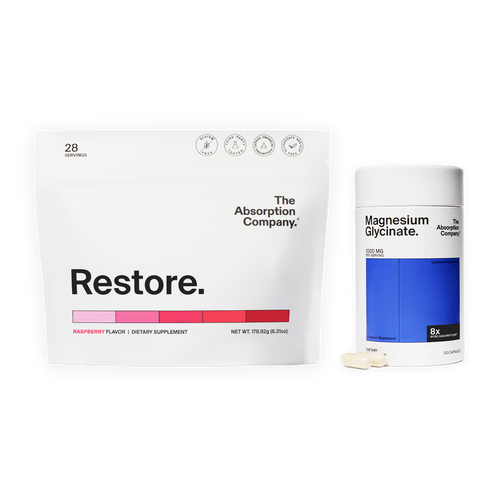
The Absorption Company created a completely different approach. With our dual-absorption technology, Capsoil® liposomal delivery paired with Chelamax® chelation, our magnesium is absorbed at a record-breaking 64%. That means more impact, fewer pills, and less waste. Since our magnesium glycinate is extracted from Dead Sea mineral-rich waters, not synthesized in unclear, industrial labs, you get one of the purest and most effective forms in the world.
If your current routine isn’t giving you the benefits you expected, absorption might be the missing link your body has been waiting for.
Why Absorption Plays a Direct Role in Results
Magnesium fuels more than three hundred enzymatic reactions that influence energy, rest, muscle function, and overall balance within your nervous system. Highly absorbable forms, including magnesium glycinate and magnesium citrate, make it easier for your cells to pull in the mineral and put it to work.
Magnesium helps convert the food you eat into cellular energy, which sets the stage for stronger workouts and steadier daily stamina. It also relaxes tight muscle fibers, eases post-exercise soreness, and plays a meaningful role in sleep quality by helping regulate neurotransmitters tied to calm and rest². In addition, research highlights magnesium’s influence on cardiovascular and bone health, including steady heart rhythms and healthy blood pressure levels³.
For anyone investing in a magnesium routine, absorption determines whether you feel a shift in your energy, mood, and recovery or continue wondering why your supplement cabinet never quite lives up to its promise.
Magnesium Glycinate vs. Magnesium Citrate
Many shoppers compare magnesium glycinate and magnesium citrate when searching for the best absorbed magnesium. Both forms offer strong bioavailability, yet they behave differently once they reach your digestive system.
Magnesium glycinate is paired with glycine, an amino acid that helps your body absorb the mineral with ease. This pairing creates a gentler experience for your stomach and supports deeper relaxation, balanced mood, and restorative sleep². The smooth absorption profile makes it a popular option for people who want consistent results without digestive discomfort.
Magnesium citrate is bound to citric acid, one of the cheapest and most widely available compounds on the market, often produced through industrial fermentation processes involving mold cultures.⁵ While this increases solubility, it does not translate into superior functional benefits and is far less expensive—up to ten times cheaper—than forms like magnesium glycinate.
In fact, at higher doses, magnesium citrate is more likely to cause digestive discomfort and loose stools, which is why it is commonly used as a laxative. In contrast, magnesium glycinate is bound to glycine, a naturally calming amino acid, making it a better choice for those seeking maximum absorption, relaxation, and real therapeutic benefit.
Why High Bioavailability Magnesium Supplements Matter
Many people wonder whether their magnesium supplement is creating any meaningful change. Supplement labels often highlight impressive claims, yet bioavailability determines whether those claims translate into benefits your body can feel. Bioavailability reflects how much magnesium your system can absorb and use, which is why the form, particle size, and delivery method matter more than most shoppers realize.
Some traditional forms, including magnesium oxide, remain common because they are inexpensive, but research shows that the body absorbs very little from these formats. More soluble forms, like magnesium glycinate, give your digestive system a stronger opportunity to take in the minerals¹. When shoppers want a form that works with the body rather than against it, options like our best magnesium glycinate formula become an immediate standout.
At the same time, particle size shapes absorption in measurable ways. Smaller nutrient particles expose more surface area during digestion, which helps your system break the mineral into fragments your cells can use. This process mirrors the way crushed ice blends faster than larger pieces. These principles sit at the core of any high bioavailability magnesium supplement built to deliver meaningful benefits.
Before adding a product to your daily routine, it helps to ask whether that formula aligns with magnesium with high bioavailability or relies on conventional pills that pass through the body with limited impact. Your system benefits most when the mineral reaches your bloodstream in substantial amounts.
Signs You May Need a Highly Absorbable Magnesium
Plenty of people stick to a solid wellness routine — eating well, staying active, and prioritizing sleep — yet still struggle with low energy, slow recovery, brain fog, restless nights, or stubborn muscle tension. Often, the missing link is absorption: how much magnesium your body can actually take in and use each day. Many traditional supplements have very low bioavailability, leaving your muscles, nerves, heart, and metabolic systems under-supported and still craving this essential mineral.
Magnesium also plays a critical role in how your body activates and uses vitamin D. If your vitamin D levels are low, poor magnesium status could be part of the reason — without enough magnesium, your body cannot properly absorb and convert vitamin D into its active form.
Signs Your Body Needs More Magnesium
Muscle cramps that strike out of nowhere, stubborn tightness after a workout, or legs that simply won’t stay still at night are often signs that your cells are running low on the support they need. When magnesium isn’t making it into your bloodstream in meaningful amounts, your muscles can’t fully relax, your nerves stay overactive, and your body struggles to repair and reset. Over time, this can show up as slower recovery, reduced performance, more frequent soreness, and sleep that never quite feels restorative — no matter how healthy the rest of your routine may be.
Research highlights magnesium’s role in energy production and neuromuscular balance, which means that low absorption affects more than your workouts¹.
Fatigue that follows you from morning to night — even after a full night’s sleep — can often be traced back to low magnesium levels or poor absorption. Magnesium is essential for turning the food you eat into usable cellular energy, so when it isn’t getting absorbed effectively, your body runs on a constant “low battery” mode. This can make even simple daily tasks feel heavier, workouts feel harder, and mental focus feel harder to sustain. If your routine relies on low-absorption forms, it may be quietly working against your ability to keep up with a full, active, demanding life.
Anxiety, restless sleep, or disrupted sleep cycles can also appear when the body receives too little absorbable magnesium. The mineral plays a direct role in neurotransmitter activity tied to calm and rest1. When levels remain low, restorative sleep becomes harder to access. Many people notice recurring headaches or migraines during periods of low magnesium intake.
Digestive slowdowns, irregularity, or overall sluggishness can also connect to inadequate magnesium. The digestive system relies on steady magnesium levels to keep muscles and nerves functioning smoothly⁴.
Why High-Absorption Magnesium Is The Way To Go
These signals often reflect a gap between magnesium intake and what your body actually absorbs. Modern farming practices have reduced the nutrient density in many foods, making deficiencies more likely for active and wellness-focused individuals. While many supplements claim “high absorption,” not all deliver on that promise. To truly assess a magnesium supplement’s effectiveness, look for brands that test the percentage of the compound your body can absorb, confirm that minerals are fully chelated, and use multiple technologies to enhance uptake. Most brands meet only one of these criteria, if any.
A glycinate-based formula that checks all these boxes becomes a practical and efficient way to replenish magnesium stores. That’s why options like our best magnesium glycinate for sleep can be a meaningful upgrade — backed by dual absorption technology to maximize uptake and deliver real benefits where your routine demands deeper support.
Finding the Right Magnesium Supplement for Your Lifestyle
Many people discover that a supplement routine only works well when the body absorbs the mineral efficiently. High absorption magnesium plays a direct role in that process, since your system relies on magnesium for steady energy, deep rest, muscle function, and a balanced nervous system. A form built for high bioavailability becomes far more dependable for people with active, wellness-focused lifestyles.
Identifying The Right Magnesium Supplement For You
- For restless sleep or nighttime tension: Magnesium glycinate offers a gentle, highly absorbable form that influences relaxation and deeper, more restorative sleep cycles.
- For muscle recovery, workouts, or post-exercise soreness: While magnesium citrate dissolves easily, it can cause digestive discomfort at higher doses. Magnesium glycinate, on the other hand, is highly absorbable without upsetting the gut, allowing your body to take in more magnesium efficiently. This makes glycinate the smarter choice for supporting neuromuscular balance, easing tightness, and optimizing recovery over the long term.
- For lingering fatigue or low daily stamina: Both glycinate and citrate help the body convert food into cellular energy, which can strengthen daytime productivity and workout performance. However, if you’re looking for maximum absorption that offers an all-in-one solution, glycinate is an optimal choice.
- For recurring headaches or frequent migraines: Research indicates that absorbable magnesium may help reduce the frequency or intensity of headaches for some individuals¹.
- For targeted absorption with minimal digestive discomfort: Magnesium glycinate remains a preferred match for people who want a smoother experience with fewer digestive side effects.
- For an active lifestyle that demands consistency: A high-absorption formula ensures that more magnesium reaches your bloodstream, where it can reinforce energy pathways, muscle function, and nervous-system steadiness throughout the day.
Read More:
Sources:
- Schwalfenberg, G. K., & Genuis, S. J. (2017). The Importance of Magnesium in Clinical Healthcare. Scientifica, 2017, 4179326. https://doi.org/10.1155/2017/4179326
- Sinha, Raghu, et al. "Oral Supplementation with Liposomal Glutathione Elevates Body Stores of Glutathione and Markers of Immune Function."European Journal of Clinical Nutrition, 2018. PMID: 28853742.
- Healthline. (2023, August 8). Magnesium glycinate: Benefits, uses, and side effects. https://www.healthline.com/health/magnesium-glycinate
- University of Nebraska–Lincoln. 8 magnesium deficiency symptoms and 9 high-magnesium foods. https://health.unl.edu/8-magnesium-deficiency-symptoms-and-9-high-magnesium-foods/
- https://www.webmd.com/diet/health-benefits-magnesium-citrate
- About.” The Absorption Company, Absorbmore, https://www.absorbmore.com/pages/about
Disclaimer:
The information provided in this article is for general informational and educational purposes only and is not a substitute for professional medical advice, diagnosis, or treatment. Always seek the guidance of your physician or other qualified health provider with any questions you may have regarding your health or a medical condition. Never disregard or delay seeking professional medical advice because of something you have read here.