


Magnesium threonate vs glycinate is often presented as a simple choice between a brain supplement and a relaxation supplement. That sounds convenient, but it gives a much more certain answer than the evidence allows. Both provide magnesium in a particular chemical form. Their research histories, ingredient weights, available products, and prices differ. What matters is which differences are supported and which differences make a practical difference to your own purchase. This guide helps you compare the two without pretending to assign a scientific score to focus, calm, or sleep. Begin by deciding what you want to understand: the quality of a specific study, the magnesium declared on a label, the ease of taking a serving, or the cost of maintaining a routine. The priority comparison can place those questions side by side. It cannot determine a personal dose, diagnose a magnesium problem, or promise that one form will produce a particular feeling.
Start with what the two names describe
Magnesium L-threonate contains magnesium associated with L-threonic acid. Magnesium glycinate contains magnesium associated with glycine; bisglycinate is the more specific term commonly used for magnesium associated with two glycine molecules. The accompanying compound affects the formula and how much of its weight is elemental magnesium. It does not change the fact that the magnesium amount needs to be read separately on the label.
Neither name tells you everything in a bottle. One product may be a straightforward mineral formula, while another adds botanicals or sleep-related ingredients. Some products combine several magnesium sources. Others rely on a branded ingredient with a defined specification. Compare the complete formula, then ask which evidence applies to that formula. A headline using a familiar magnesium form is only the beginning of the comparison.
For a concrete shopping exercise, place two label images beside one another and hide the promotional descriptions temporarily. Identify the magnesium line, serving size, other active ingredients, and other ingredients. Write down anything you cannot verify. This gives you a stable factual starting point before stories about brain penetration, calm, or premium absorption begin influencing the choice.
A choice between interesting research and everyday convenience
Imagine researching magnesium during a busy study term. A threonate page leads with cognition, while a glycinate page emphasizes an evening routine. Both sound relevant, so you choose human research as your first comparison priority. You read what each study actually measured and notice that neither paper directly compares these two bottles. That helps you separate an interesting research question from a claim that one product must work better for you.
Next you inspect the labels. One option involves more capsules and a higher recurring cost; the other fits your ingredient preferences more easily. You record those differences instead of giving each form a made-up focus or calm score. Your final note might say that one option is easier to fit into your routine, while the outcome you originally wanted remains uncertain. You have not solved a health question through shopping. You have made the purchase decision easier to explain and identified exactly what more evidence would need to show.
Choose a priority without turning it into a promise
It is reasonable to arrive with a goal, such as simplifying an evening routine or examining research related to cognition. Treat that goal as a question to investigate. Asking whether a specific study measured memory is more useful than deciding that all threonate products are brain boosters. Asking whether a glycinate study measured sleep symptoms is more useful than assuming every user should feel sleepy after a capsule.
The side-by-side tool can show categories such as human research, label clarity, format, capsule count, ingredient preferences, and price. These are understandable comparison dimensions. They should remain descriptions rather than scores suggesting that one form is eighty percent better for focus or three points more calming. No validated scale supports those kinds of shopping rankings.
A student may prioritize the design of a cognition trial but find that the participants or outcomes do not match their situation. A busy parent may prioritize an uncomplicated formula and manageable monthly cost. A traveler may prioritize packaging and capsule burden. Those are different decisions, and a useful comparator allows them to stay different instead of forcing a single universal winner.
Read glycinate sleep evidence at the right scale
A 2025 placebo-controlled bisglycinate trial enrolled 155 adults who reported poor sleep. Over four weeks, the magnesium group had a modestly greater improvement in an insomnia symptom questionnaire than the placebo group. The reported effect was small. The authors identified a need for objective sleep assessment and longer studies.
This is more informative than a testimonial because participants were assigned to treatment or placebo and outcomes were evaluated systematically. Its limits still matter. A questionnaire measures reported symptoms rather than proving that a supplement changes every aspect of sleep. A four-week study does not establish long-term effects. Results in people reporting poor sleep do not tell us exactly what would happen in people who already sleep well.
For shopping, the practical conclusion is narrow: there is human research worth examining, but a general ingredient result cannot certify every finished product. Check whether the formula, elemental amount, participant characteristics, and duration resemble the claim being made. A brand can discuss research without presenting the study as a guarantee that its own bottle will resolve an individual sleep problem.
Read threonate studies with the same questions
A 2024 randomized threonate trial studied eighty adults aged thirty-five to fifty-five with self-reported sleep problems for twenty-one days. It included questionnaires and measurements from a consumer sleep wearable. Some sleep-related and daytime-function measures favored the threonate group. This gives researchers useful questions to investigate further.
The study was short and involved a selected group of participants. Wearable-derived sleep scores are not interchangeable with every clinical sleep test, and improvement in a particular score should not be translated into a promise of more restorative sleep for every customer. When several outcomes are reported, read the whole pattern instead of selecting the most attractive positive result. Funding and author relationships also belong in a complete appraisal.
Crucially, this trial compared threonate with placebo, not with glycinate. The glycinate study used a different population, duration, and outcome framework. Putting their results on neighboring product cards does not create a head-to-head experiment. You can compare how informative the studies are for your question while acknowledging that they do not establish which form would perform better in the same people.
Separate cognition research from a brain-targeting headline
Threonate is frequently marketed through a brain-focused story. A mechanism can explain why researchers became interested in an ingredient, but a plausible mechanism is not the same thing as demonstrated everyday benefit. Animal findings, laboratory observations, and human cognitive tests each provide different kinds of information. A consumer claim should make that level of evidence visible.
A six-week randomized study of magnesium L-threonate in one hundred younger adults with dissatisfied sleep assessed cognitive performance alongside sleep-related outcomes. Such work is more relevant to a cognition question than a general description of magnesium biology. It still needs to be read in terms of its participants, particular tests, study length, and specified formulation. Some cognitive measures favored threonate, while another reasoning test and wearable sleep outcomes did not differ between groups. The study was industry funded, with funder involvement in its design. Those details belong beside the positive findings.
Ask whether the outcome you care about was actually tested. A score on a computerized task does not automatically establish improved examination results, work productivity, prevention of dementia, or treatment of memory loss. Persistent changes in memory or concentration deserve medical evaluation. Choosing a supplement because its research interests you should never require dismissing symptoms that need a broader explanation.
Compare elemental magnesium and the work of a serving
The weight of magnesium threonate or magnesium glycinate includes the accompanying compound. That means a large milligram number on the front is not necessarily the amount of magnesium you receive. Read the elemental magnesium line in Supplement Facts. Record the compound name in another field so that the amount and the form remain distinct.
Then check how many capsules make up that serving. A hypothetical three-capsule product with thirty servings and a two-capsule product with thirty servings both represent thirty labeled servings, even though their capsule counts differ. If swallowing capsules is difficult, that practical difference may matter more than a theoretical advantage you cannot verify. Powders introduce other considerations, including measuring, mixing, taste, and travel convenience.
Do not compare equal weights of the two compounds as though they necessarily provide equal magnesium. Do not assume equal elemental amounts guarantee equal outcomes either. The label gives you a consistent unit for understanding contents; it does not flatten every formulation difference. If a product does not disclose a readable elemental amount, mark that information missing and ask the company before making a numerical comparison.
Discuss digestive comfort without promising a symptom-free form
You may see glycinate described as gentle and threonate described as well tolerated. Those descriptions are not promises that no customer will experience an unwanted effect. Individual tolerability depends on more than the product name, including the full formula and the amount used. A short trial reporting good tolerability in its participants cannot rule out every uncommon problem or predict your own response.
If a previous supplement bothered your stomach, bring the actual label to a pharmacist or clinician. Record what happened, when it occurred, and what else was being used. That is more useful than guessing that the form alone caused it. Another product could contain an ingredient you react to, while a combination formula may make it difficult to identify which component matters.
Follow the product directions and any individual advice you have been given. If symptoms occur, do not use the comparator to increase intake, split servings, or construct a new schedule. Ask for an appropriate review. A shopping tool can help organize a factual record, but it should not turn an unpleasant experience into an untested experiment with multiple magnesium products.
Make the price comparison reflect the purchase you will make
Price differences between threonate and glycinate can be substantial, but compare the actual products in front of you. Divide the relevant bottle price by its labeled servings. A hypothetical forty-five-dollar bottle containing thirty servings costs one dollar and fifty cents per serving. A thirty-dollar bottle with twenty servings has the same serving cost. These examples are arithmetic, not current brand pricing.
Use equivalent purchase terms. Compare one-time orders together, then compare subscription arrangements separately. A multi-month offer can reduce the displayed monthly price while increasing the total amount charged at once. Look at renewal terms and shipping. A product that fits a thirty-day budget may not fit the same household budget when several months must be purchased together.
There is no reliable way to divide the price by an advertised focus benefit, calm score, or absorbed magnesium amount without adequate supporting measurements. Keep the financial calculation simple and transparent. You can decide a formulation is worth more to you because of readable research, convenience, or ingredient preferences. That is an explicit personal priority, not a universal calculation proving better value for everyone.
Keep food and everyday context in the picture
A choice between forms can feel urgent when you are reading supplement pages, yet it is only one part of your magnesium picture. Look at your ordinary meals as well. Beans, nuts, seeds, whole grains, and leafy vegetables offer ways to include magnesium in food. A discussion about a supplement is more useful when it begins with that broader pattern rather than assuming that choosing a premium form is the only available step.
For a practical exercise, note a few typical breakfasts, lunches, and dinners before your next professional consultation. You do not need to calculate a personal treatment target or diagnose a deficiency from a food diary. The purpose is to bring useful context: whether meals are regular, whether foods are restricted, and whether recent dietary changes might deserve attention. A clear picture of your routine may change which questions you ask about any supplement.
Also identify what else could influence the outcome you are watching. A new shift pattern, travel, increased caffeine, or a demanding month can complicate observations about sleep and concentration. Recording those circumstances does not prove or disprove a product effect. It prevents you from giving a capsule sole credit for every good day or interpreting every difficult night as evidence that you selected the wrong magnesium form. That is a fairer standard for both your own expectations and the products you are comparing.
Treat combining forms as a separate review
The phrase magnesium glycinate and threonate sometimes leads shoppers to assume they should take both. Combining them does not automatically provide the best of each. It changes the total supplemental magnesium, capsule burden, ingredient exposure, and cost. Those details require review even if each bottle appears reasonable on its own.
List every source of magnesium you already use, including multivitamins, electrolyte products, antacids, or laxatives where relevant. Bring that list, your medicines, and any kidney-related medical history to a qualified professional. The NIH magnesium reference discusses medication interactions and special concerns with impaired kidney function. The tool does not create medicine-spacing instructions or determine whether a combination is suitable.
A simpler routine also makes practical observations easier to interpret. If several products are started at once, it becomes harder to know what changed or what caused an unwanted effect. Your clinician may have a specific reason for a particular plan. In the absence of that context, purchasing two forms because their marketing stories sound complementary is an incomplete reason to combine them.
Build a shortlist that matches your actual decision
Begin with your most important question and select that priority in the side-by-side view. Read the evidence description, then inspect the labels. You might find that both products meet your ingredient preferences but one requires more capsules. Or the product with the lower bottle price may have fewer servings. Those are useful discoveries because they can change a real purchase without pretending to predict a health outcome.
Add a brief note for each unresolved question. Examples include whether testing applies to the finished batch, whether a blend discloses individual amounts, and whether the cited study used the same formulation. Keep unknown entries visible. If the manufacturer supplies more information later, update the comparison rather than allowing the original headline to remain your only reference.
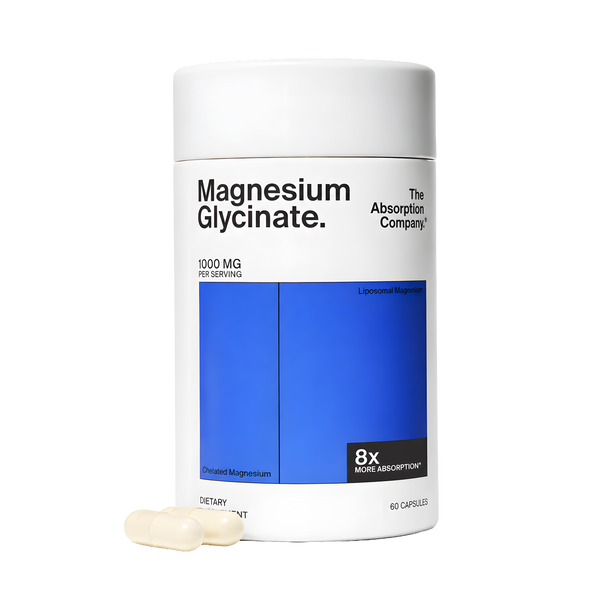
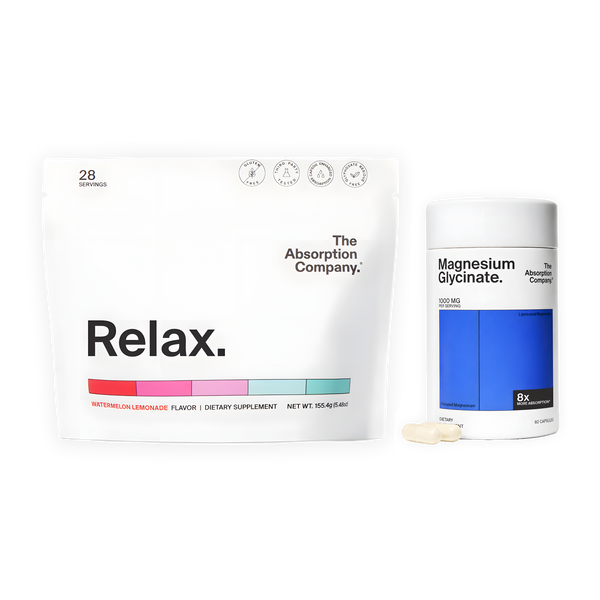
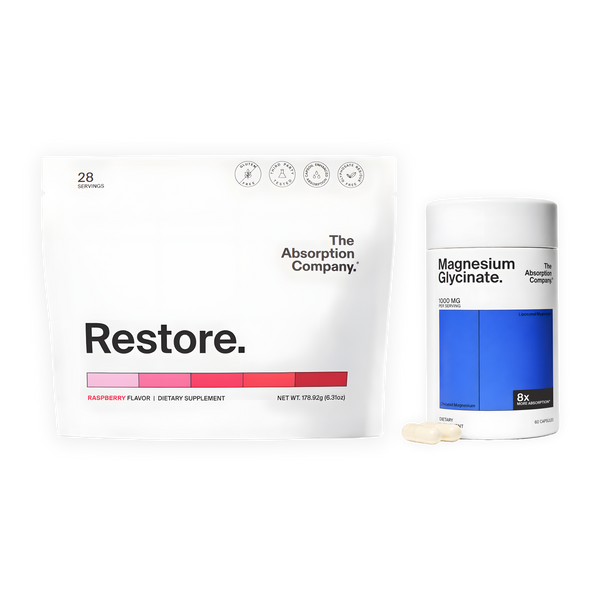
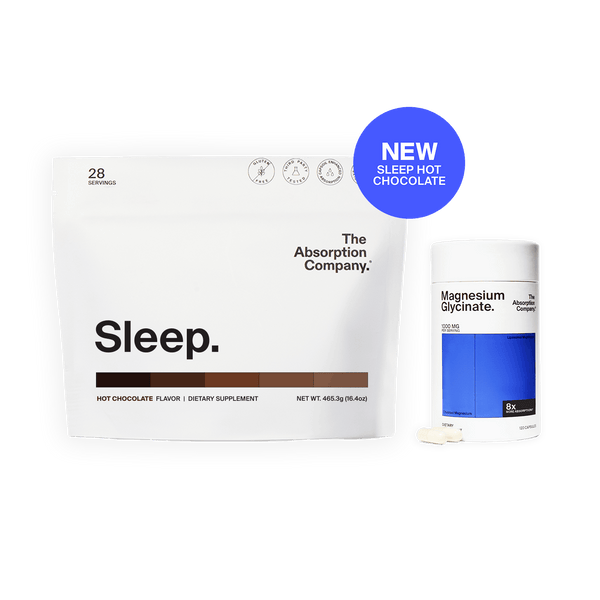
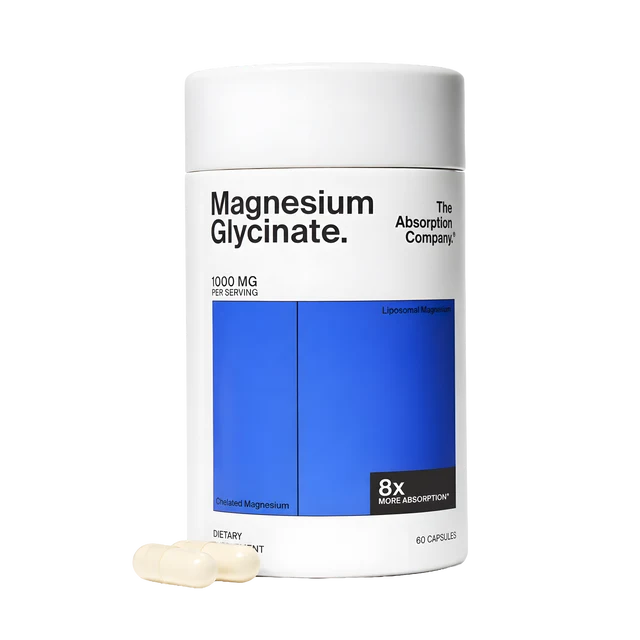
If you prefer glycinate after that review, examine The Absorption Company Magnesium Glycinate using the same checklist. Its current page describes Chelamax bisglycinate and a two-capsule serving. Confirm elemental magnesium from the current Supplement Facts panel and review all directions and ingredients. The useful outcome is a clear reason for your choice, with the remaining uncertainties still visible.
Save the final label and the price date with your notes. If a bottle is reformulated or your next order has different terms, check those changes before relying on the earlier comparison. A good shortlist is a record of a decision made with specific information. It is allowed to change when the information, your routine, or professional advice changes.
Your questions, answered.
Is threonate proven better than glycinate for sleep?
The separate trials discussed here did not directly compare the forms. Different populations and outcomes prevent declaring a reliable head-to-head winner.
Is glycinate only for nighttime use?
The form name does not create a universal timing rule. Follow the particular product directions and professional advice for your circumstances.
Can I compare the front-label milligrams?
Compare elemental magnesium in Supplement Facts. Compound weights include other material and are not interchangeable with the magnesium amount.
Should I take magnesium glycinate and threonate together?
Do not assume combining forms adds benefits. A clinician or pharmacist can review total magnesium, other ingredients, medicines, and your circumstances.
Why does the tool avoid numerical scores for focus and calm?
There is no validated consumer score that establishes how these forms compare for every user. The tool presents evidence and practical differences descriptively.
A closer look starts with a source.
Read the study or official reference behind the guide. The intervention, participants, and measured endpoint matter.
For education and everyday planning. Follow your product label and discuss individual health needs, medications, or pregnancy with a qualified clinician.