Let's talk about the powerhouse behind the scenes of your immune system: glutathione. What exactly sets glutathione apart from every other antioxidant, and why are scientists and health experts calling it "the body's master antioxidant."
Glutathione is a powerful, naturally occurring molecule made up of three amino acids: glutamine, cysteine, and glycine. Their main task is to neutralize free radicals, which are unstable molecules that cause oxidative stress, damage your cells, and accelerate signs of aging. But glutathione doesn't stop there. While you might be taking vitamin C or E to get your daily antioxidant support, glutathione is the compound that helps regenerate and recharge those antioxidants, making everything work harder and smarter for your body.
Want to know why your immune system works like a finely tuned system (or, sometimes, why it doesn't)? Glutathione plays a central role in keeping your white blood cells, your body's natural defense system, primed and ready for action. It helps maintain the integrity and function of lymphocytes and phagocytes, the cells that recognize, attack, and destroy pathogens before they wreak havoc. When your glutathione levels are optimal, your immune response is sharper, faster, and more efficient.
However, modern stressors, pollution, even strenuous exercise, and poor nutrition can all chip away at your natural glutathione reserves. That's why so many people, especially those leading active, health-conscious lifestyles, are looking for ways to support and replenish their glutathione levels through smarter supplementation and nutrition.
How Your Immune Cells Rely on Glutathione
Ever wonder what gives your immune system the power to handle daily threats without crashing your plans. Vitamin C and zinc matter, yet glutathione often does the quiet, behind-the-scenes work that keeps defenses steady.
Glutathione acts like a frontline shield for immune cells. White blood cells, the body's natural defenders, lean on glutathione to stay energized and responsive. T cells and natural killer (NK) cells, in particular, use glutathione to stay sharp when viruses show up and the immune system needs to move fast.
During an immune response, white blood cells create reactive oxygen species (ROS) to help neutralize invaders like the viruses behind common colds. Without enough antioxidants, that same burst of ROS can start wearing down the very cells meant to protect your body. Glutathione helps clear excess ROS so immune cells can keep doing their job with less cellular damage.
As glutathione levels stay stronger, immune responses tend to run smoother. Research links healthier glutathione status with a more robust glutathione immune system response, including more active white blood cells and better resilience during seasonal challenges such as recurring colds.
Everyday life can drain reserves faster than most people realize. For example, stressful weeks, heavy training blocks, short sleep, and pollution can chip away at glutathione, which can leave the body feeling run down at the exact wrong time. For anyone trying to stay consistent with workouts, work, and family plans, reinforcing glutathione and immunity can feel like a practical way to keep momentum.
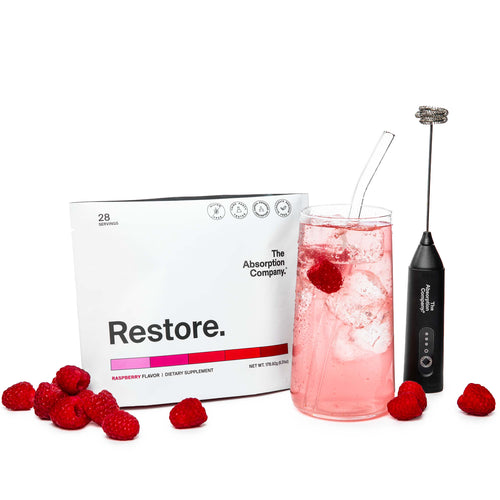
For an added layer of nutrition, pairing glutathione-focused habits with high-absorption nutrients for immune defense can help reinforce daily foundations. Our Restore supplement combines liposomal glutathione with vitamin C for nutrient synergy, creating comprehensive immune support your body can actually use.
Glutathione’s Role in Detoxification Pathways
Ever wonder how the body clears the daily load from pollution, processed foods, and normal metabolism. Glutathione sits at the center of that cleanup process, which matters for more than detox conversations.
For starters, the liver acts as the body's main detox hub, and glutathione works like a reliable cleanup system inside it. Glutathione binds to certain toxins and helps convert them into compounds the body can move out more safely. As that internal process flows, fewer troublemakers linger around to stir up oxidative stress.
Beyond that first sweep, glutathione plays a major role in Phase II detoxification, a set of pathways that process fat-soluble compounds that can accumulate in tissues. When Phase II detox keeps pace, immune cells can stay focused on their primary job. That connection matters for anyone trying to stay consistent through cold season, busy workweeks, or hard training blocks. Fewer setbacks mean fewer days spent dragging through workouts, canceling plans, or living on tea and tissues.
Inflammation is part of the story here, too. When detox pathways slow down, oxidative stress can rise, and inflammation can feel louder, straining recovery and immune rhythms. In that context, glutathione and immunity work together as part of the body's natural balance system.
Newer research also suggests progress on the supplement side of the equation. A 2025 paper discussed N-methylated glutathione (GSH) derivatives as candidates for oral use, noting improved stability and bioavailability and pointing to potential applications in conditions tied to oxidative stress and chronic inflammation (Yin et al., 2025). That's one reason glutathione for inflammation keeps showing up in research conversations.
Restore's liposomal glutathione supports all three detoxification phases with absorption technology that actually reaches your liver. Within 4-6 weeks of consistent use, Restore's formula fuels Phase II detox enzymes, helping the body remove harmful compounds like pesticides, heavy metals, alcohol, and pollutants.
Synergistic Nutrients: Vitamin C, Selenium, and Alpha-Lipoic Acid
Have you ever wondered why top immune-supporting supplements don't just rely on a single ingredient. It's because your body is a finely tuned system, and sometimes it takes a team effort for nutrients to really work when it comes to glutathione.
Vitamin C helps keep antioxidant defenses active. Beyond its own role, vitamin C can help regenerate glutathione, which helps keep white blood cells ready when daily stress, training, or short sleep starts piling up. For someone trying to stay consistent through work deadlines and workout plans, that regeneration support can matter because immune dips rarely arrive on a convenient schedule.
Next, selenium plays a steady behind-the-scenes role in antioxidant function. With enough selenium in the mix, glutathione-related processes can run more reliably, which helps reinforce the bigger goal of glutathione and immunity working in sync.
Alpha-lipoic acid (ALA) adds another layer because it can operate in both water- and fat-based environments. That flexibility helps it interact across different parts of the body's antioxidant system. Research has also described ALA as an antioxidant with immunomodulatory effects, meaning it may influence immune activity through different pathways (Liu et al., 2019). This broad support is the difference between hoping for the best and building a solid wellness routine during cold and flu season.
Together, vitamin C, selenium, and ALA help create a more complete foundation for glutathione immune system support. Instead of leaning on a single ingredient, this kind of approach aims to keep white blood cells fueled, oxidative stress more controlled, and immune responses more resilient during cold season and high-stress weeks.
Restore's comprehensive formula pairs liposomal glutathione with vitamin C for this exact synergy, plus CoQ10, B vitamins, and electrolytes for complete immune and cellular support.
Why Bioavailability Matters for Glutathione Supplements
Ever buy a glutathione supplement, only to wonder, "Is my body actually using any of this." You're not alone. When it comes to glutathione supplements, bioavailability is the difference between making a real impact on your immune system or just hoping for the best.
Glutathione plays a major role in antioxidant defense, which matters for white blood cells that stay on the front lines during stress, travel, hard training blocks, and cold season. The catch is delivery. Many conventional glutathione supplements can break down during digestion long before they reach the bloodstream, which can leave people feeling like they paid for potential, not impact.
Particle size and structure play a big role here. Larger molecules tend to move through the digestive tract without crossing the gut wall, which limits how much glutathione can actually contribute to glutathione immune support. Even when oral glutathione can be absorbed, outcomes depend on how well the formula survives digestion and reaches circulation.
Research has reported that protein-bound glutathione levels rose within 1–2 hours after ingestion, suggesting orally administered glutathione can enter the blood (Honda et al., 2017). That's encouraging, yet it also raises a bigger question: how can formulas help more of it make the trip?
The Absorption Company Approach: Built for Real Absorption
That question is exactly what The Absorption Company is built around. Our mission starts with a clear reality: if the body can't absorb it, your body can't use it. Rather than treating absorption like a footnote, our formulas focus on delivery through advanced technology that combines Capsoil® liposomal technology with pharmaceutical-grade formulation. This approach is designed to help nutrients survive digestion and arrive where they can actually do their job.
Capsoil® technology reduces nutrient particles down to the nanometer level and surrounds them with a protective lipid layer. Smaller particles mean more surface area, which helps the body absorb more active nutrients as they pass through the small intestine. With that kind of design, glutathione and immunity support can feel less like a guessing game and more like a routine built for real-world consistency.
In simple terms, bioavailability can be the difference between "taking it daily" and "feeling it daily." For anyone trying to stay energized, keep workouts on track, and avoid getting knocked off course by recurring colds, a high-absorption formula makes glutathione immune system support far more practical.
Sources:
- Klihada, F. (2023, February 3). Relationship between glutathione and the immune system. Oxidants and Antioxidants in Medical Science. https://www.ejmoams.com/ejmoams-articles/relationship-between-glutathione-and-the-immune-system-95869.html
- Honda, Y., Kessoku, T., Sumida, Y., Kobayashi, T., Kato, T., Ogawa, Y., Tomeno, W., Imajo, K., Fujita, K., Yoneda, M., Kataoka, K., Taguri, M., Yamanaka, T., Seko, Y., Tanaka, S., Saito, S., Ono, M., Oeda, S., Eguchi, Y., Aoi, W., … Nakajima, A. (2017). Efficacy of glutathione for the treatment of nonalcoholic fatty liver disease: an open-label, single-arm, multicenter, pilot study. BMC gastroenterology, 17(1), 96. https://doi.org/10.1186/s12876-017-0652-3
- Kerksick, C., & Willoughby, D. (2005). The antioxidant role of glutathione and N-acetyl-cysteine supplements and exercise-induced oxidative stress. Journal of the International Society of Sports Nutrition, 2(2), 38–44. https://doi.org/10.1186/1550-2783-2-2-38
- Atkuri, K. R., Mantovani, J. J., Herzenberg, L. A., & Herzenberg, L. A. (2007). N-Acetylcysteine--a safe antidote for cysteine/glutathione deficiency. Current opinion in pharmacology, 7(4), 355–359. https://doi.org/10.1016/j.coph.2007.04.005
- Yin, N., Harris, P. W. R., Liu, M., Sun, J., Chen, G., Wen, J., & Brimble, M. A. (2025). Enhancing the Oral Bioavailability of Glutathione Using Innovative Analogue Approaches. Pharmaceutics, 17(3), 385. https://doi.org/10.3390/pharmaceutics17030385
- Liu, W., Shi, L. J., & Li, S. G. (2019). The Immunomodulatory Effect of Alpha-Lipoic Acid in Autoimmune Diseases. BioMed research international, 2019, 8086257. https://doi.org/10.1155/2019/8086257
Disclaimer:
The information provided in this article is for general informational and educational purposes only and is not a substitute for professional medical advice, diagnosis, or treatment. Always seek the guidance of your physician or other qualified health provider with any questions you may have regarding your health or a medical condition. Never disregard or delay seeking professional medical advice because of something you have read here.