The conversation around magnesium threonate vs glycinate goes deeper than labels. Both are considered premium forms, yet they behave very differently once inside your body. To understand which one fits your goals, you need to see how each form moves, absorbs, and works at the cellular level.
Magnesium Threonate For Brain Support
Magnesium threonate for brain health was developed to help magnesium cross into brain tissue more efficiently, supporting communication between neurons. Many people associate magnesium threonate with sharper focus, clearer thinking, and stronger magnesium for cognitive function over time. Mental fatigue that feels like walking through fog, but threonate is the form designed to address that.
Magnesium Glycinate For Relaxation
Magnesium glycinate is bound to glycine, an amino acid known for its calming effect on the nervous system. That pairing explains many of the commonly reported magnesium glycinate benefits are relaxation and physical ease. If tight shoulders, restless sleep, or a mind that won’t power down sound familiar, glycinate is often chosen for its steady, soothing influence.
Absorption Is The Real Differentiator
Form matters, but absorption determines results. Many brands rely on magnesium citrate because it dissolves easily and costs less to produce, yet the trade-off is lower quality uptake and more digestive discomfort for the consumer. High absorption magnesium shifts the focus back to cellular delivery so you actually experience magnesium glycinate benefits instead of wondering why nothing feels different.
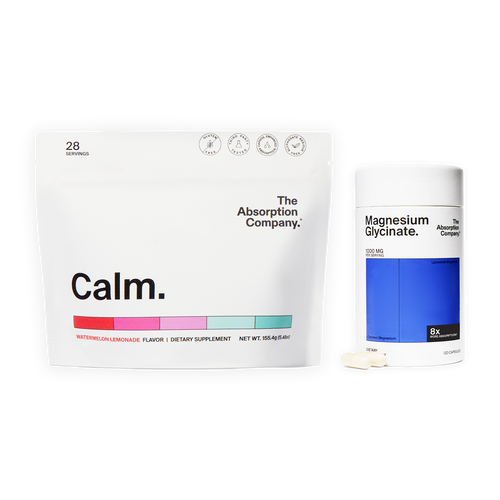
So why does more absorption equal more benefits? Standard magnesium glycinate delivers around 23.5% absorption in clinical testing. The Absorption Company's formula, powered by Chelamax® chelation and Capsoil® liposomal technology, delivers 64% bioavailable magnesium. That is 267% more absorbed than leading glycinate products, and 8x more than other magnesium forms.
How Each Form Feels In Real Life
On paper, both forms support magnesium levels, but in real life they can feel very different. Threonate is often described as mentally clarifying and supportive for deep work, study sessions, and long-term brain resilience. Glycinate tends to feel physically calming, like your nervous system finally exhales after a long day, which is why many people gravitate toward it when comparing magnesium threonate vs glycinate for everyday stress support.
Magnesium Threonate Benefits For Brain And Cognitive Function
Magnesium threonate has earned attention for its targeted effect on the brain. In the broader magnesium threonate vs glycinate discussion, this is the form most often connected to memory, focus, and long-term cognitive resilience. If mental clarity and productivity matter to you, here is where magnesium threonate benefits stand out:
Supports Memory And Learning
One of the most researched magnesium threonate benefits is its effect on synaptic activity in the brain. Synapses are the gaps where brain cells communicate, and stronger communication can translate to better memory retention and faster recall. For anyone who has reread the same paragraph three times or walked into a room and forgotten why, this is the type of daily support threonate is designed to address.
Enhances Magnesium For Cognitive Function
Magnesium plays a direct role in regulating NMDA receptors, critical for learning and neural adaptability. Magnesium threonate for brain support is specifically formulated to raise magnesium levels in brain tissue, which helps maintain sharper thinking. For professionals juggling demanding schedules or fitness-focused women balancing training and work, this can feel like steadier output instead of afternoon burnout.
May Help With Mental Fatigue And Brain Fog
Brain fog often feels like static in your head, where thoughts are slower and decision-making takes more effort than it should. By supporting magnesium levels in the brain, threonate may help reduce that drained, overstimulated feeling that builds after long days. When people compare magnesium threonate vs glycinate, this cognitive clarity is often the reason threonate gets chosen.
Magnesium Glycinate Benefits For Relaxation And Recovery
If magnesium threonate often gets attention for the brain, magnesium glycinate earns its reputation for calming the body. In the magnesium threonate vs glycinate conversation, this is the form many people reach for when stress feels physical and sleep feels shallow. Let’s break down the most meaningful glycinate benefits and how they translate into real life:
Magnesium Glycinate For Relaxation And Nervous System Balance
Magnesium glycinate works through its bond with glycine, an amino acid that supports calming signals in the nervous system. Think of glycine as a gentle brake pedal that helps slow down an overactive stress response. When your heart is not racing and your muscles are not bracing for impact, your body finally shifts out of fight or flight mode.
Supports Muscle Recovery And Physical Ease
Hard workouts three to five times a week demand proper mineral support, especially for muscle contraction and release. Magnesium glycinate benefits include helping muscles relax after they tighten, which can mean fewer nighttime cramps and less post workout stiffness. That loose, comfortable feeling in your legs at night is often a sign your magnesium levels are being supported properly.
Helps With Stress And Threonate Vs Glycinate For Anxiety
Stress does not just live in your thoughts, it lives in your shoulders, your jaw, and your gut. When comparing threonate vs glycinate for anxiety, glycinate is often preferred for its whole-body calming effect. It supports a steadier mood and helps smooth out that edgy, overstimulated feeling that builds during long workdays.
Threonate Vs Glycinate For Sleep And Anxiety
Sleep and anxiety are often the deciding factors in the magnesium threonate vs glycinate debate. You want a calm mind, a relaxed body, and the ability to fall asleep without replaying your entire day at midnight. So how do these two forms compare when the goal is real rest and emotional balance:
Threonate vs Glycinate For Sleep
When people compare threonate vs glycinate for sleep, the difference often comes down to mind versus body. Magnesium threonate may help quiet mental chatter by supporting magnesium for cognitive function and healthy neural signaling. Magnesium glycinate, on the other hand, tends to feel more physically calming, helping your muscles and nervous system settle so falling asleep feels natural instead of forced.
Threonate vs Glycinate For Anxiety
Anxiety can feel mental, physical, or both, which is why the form you choose matters. Threonate may support a clearer head and steadier thought patterns, while glycinate often supports a calmer body and smoother stress response. If your anxiety shows up as racing thoughts, threonate may stand out, but if it feels like tightness in your chest or constant tension, glycinate is often the preferred option.
Which Is The Best Magnesium For Sleep
The best magnesium for sleep depends on what is actually keeping you awake. If your mind will not slow down, magnesium threonate for brain support may help you feel more mentally settled before bed. If your body feels wired and tense, magnesium glycinate may create the physical ease needed for deeper rest.
Magnesium Threonate Dosage And Magnesium Glycinate Dosage
Dosage is where intention meets results in the magnesium threonate vs glycinate decision. The right form matters, but the right amount taken consistently is what allows your body to respond. Let’s simplify magnesium threonate dosage and magnesium glycinate dosage so you can approach both with clarity and confidence:
Magnesium Threonate Dosage
Magnesium threonate dosage typically ranges between 1,000 to 2,000 mg of the compound daily, divided into two or three servings, which usually provides a lower amount of elemental magnesium compared to other forms. It is often taken earlier in the day or split between afternoon and evening to support magnesium for cognitive function and steady brain levels. Consistency is key, since brain tissue levels build over time rather than overnight.
Magnesium Glycinate Dosage
Magnesium glycinate dosage commonly ranges between 200 to 400 mg of elemental magnesium per day, often taken in the evening. The Absorption Company's formula changes the math. Two capsules of our Chelamax® and Capsoil® dual-delivery system have the same biological impact as six capsules of standard glycinate or 10 capsules of magnesium oxide.
A smaller, more effective dose reaches more of your cells, which means you get more from less. When selecting the best magnesium glycinate, look for a formula that clearly states elemental magnesium per serving and uses a verified dual-delivery system. Starting on the lower end and adjusting gradually lets you find the amount that produces calm without digestive discomfort.
Timing Based On Your Goal
If your priority is focus and mental clarity, magnesium threonate for brain support may fit better earlier in the day. If your goal is stress relief, muscle recovery, and being physically calm at night, magnesium glycinate benefits are often felt most strongly when taken in the evening. Some people even use both strategically, adjusting timing based on how stress shows up in their body.
What to Know Before Buying from The Absorption Company
Our magnesium glycinate uses a dual-delivery system: Chelamax® chelated magnesium bisglycinate bonded at the molecular level for intestinal uptake and Capsoil® liposomal encapsulation. The approach results in 64% bioavailable magnesium that’s lab-tested. Here are a few things worth knowing before you buy:
What makes this formula different:
- 267% more absorbed than leading glycinate products
- 8x more absorbed than magnesium oxide
- Sourced from Dead Sea minerals for exceptional purity
- Third-party tested for absorption, purity, and contaminants
- Made in the USA in an FDA-registered, cGMP, and NSF-certified facility
- Glyphosate-free, gluten-free, and non-GMO
What it will not do: This product is a dietary supplement, not a medication. It supports calm, recovery, and sleep quality. It does not diagnose, treat, or cure any condition.
What to expect: Magnesium glycinate benefits for relaxation and sleep can appear within days in people with depleted levels. Cognitive benefits from threonate tend to develop over several weeks.
Sources:
- Hausenblas, H. A., Lynch, T., Hooper, S., Shrestha, A., Rosendale, D., & Gu, J. (2024). Magnesium-L-threonate improves sleep quality and daytime functioning in adults with self-reported sleep problems: A randomized controlled trial. Sleep Medicine X, 8(100121), 100121–100121. https://doi.org/10.1016/j.sleepx.2024.100121
- Boyle, N., Lawton, C., & Dye, L. (2017). The Effects of Magnesium Supplementation on Subjective Anxiety and Stress—A Systematic Review. Nutrients, 9(5), 429. https://doi.org/10.3390/nu9050429
- Zhang, C., Hu, Q., Li, S., Dai, F., Qian, W., Hewlings, S., Yan, T., & Wang, Y. (2022). A Magtein®, Magnesium L-Threonate, -Based Formula Improves Brain Cognitive Functions in Healthy Chinese Adults. Nutrients, 14(24), 5235. https://doi.org/10.3390/nu14245235
- Schwalfenberg, G. K., & Genuis, S. J. (2017). The importance of magnesium in clinical healthcare. Scientifica, 2017(1), 1–14. https://doi.org/10.1155/2017/4179326
- Lubran, R. (2025, January 14). Magnesium L-threonate vs. magnesium glycinate: What’s the difference? Verywell Health. https://www.verywellhealth.com/magnesium-l-threonate-vs-magnesium-glycinate-8758091
Disclaimer:
The information provided in this article is for general informational and educational purposes only and is not a substitute for professional medical advice, diagnosis, or treatment. Always seek the guidance of your physician or other qualified health provider with any questions you may have regarding your health or a medical condition. Never disregard or delay seeking professional medical advice because of something you have read here.
FDA Disclaimer:
These statements have not been evaluated by the Food and Drug Administration. The products are not intended to diagnose, treat, cure, or prevent any disease.