

The phrase “best natural GLP-1 booster” sounds like a straightforward supplement category, but it brings together products with different ingredients, research, and intended uses. It is not a medical definition, and a supplement using GLP-1 language is not the same as a prescription GLP-1 receptor agonist. A claim about supporting a natural pathway does not establish the effects, safety profile, or approved uses of a medicine. This evidence explorer helps you compare the questions behind the claims: what was studied, in whom, for how long, and with what result? You can review ingredient categories, label transparency, and practical considerations without receiving a treatment recommendation or a promised weight loss result. If you already use a prescription medicine or are seeking help for weight or blood glucose concerns, use the information to support a conversation with your care team.
Understand the hormone before comparing products
GLP-1, short for glucagon-like peptide-1, is a hormone involved in the body's response to food. It participates in signaling related to appetite and glucose regulation. Those normal processes make GLP-1 interesting to researchers studying meals, the gut, and medicines. They do not make every product mentioning the hormone part of the same treatment category.
A supplement may be described as supporting natural GLP-1 signaling because of an ingredient's proposed mechanism or a measured change in a study. That description needs context. A laboratory result, a short term change in circulating hormone, and a sustained improvement in a clinical outcome are different findings. The phrase “boosts GLP-1” should start an evidence question, not end it.
Ask whether the study measured active or total GLP-1, whether the measurement followed a meal, and how long it lasted. You may not find every detail in a product summary, which is a reason to request the paper. A dramatic percentage can be difficult to interpret without the starting value, comparison group, and measurement conditions.
For this explorer, a mechanism is a useful research lead. It is not a prediction of how much weight someone will lose. Products that influence a normal pathway in different ways cannot be assumed to produce the same effect merely because the pathway name is shared.
Start with the outcome behind the headline
Imagine comparing supplements after seeing a headline about natural GLP-1 support. Your interest is understanding research on fullness during the day, but the product pages show hormone percentages and weight results together. Begin by selecting the outcome you want to investigate in the explorer, rather than choosing the biggest number across unrelated studies.
For each ingredient, check the actual preparation, participants, study duration, and measurement. A short-term hormone result belongs in a different evidence category from a sustained weight outcome. If the product combines several researched ingredients, look for a study of that finished combination; adding results from separate ingredient trials does not create one.
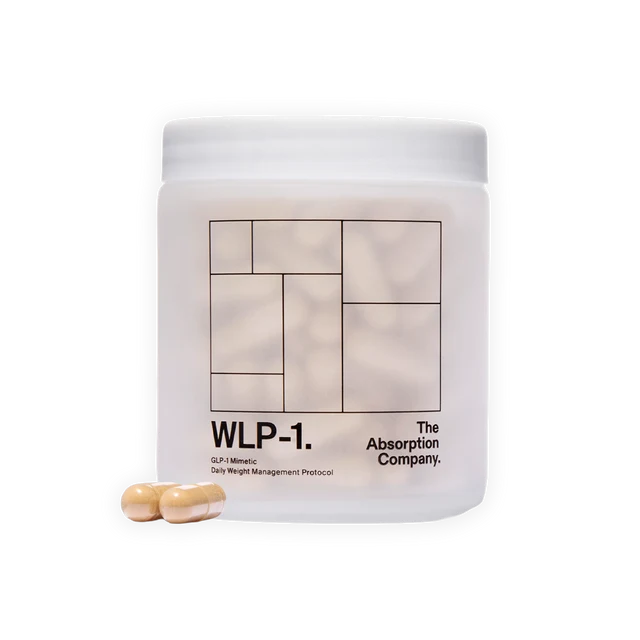
Now inspect a complete label such as WLP-1 and write down the most important evidence gap you found. If you already use prescription treatment, keep it in its own category and have the combination reviewed before adding anything. The comparison helps you ask a better question, without turning a supplement into a medication substitute.
Keep prescription medicines in their own category
Prescription GLP-1 medicines are evaluated as specific drugs with defined indications, dosing instructions, contraindications, and monitoring considerations. Some medicines used in weight management act at more than one hormone receptor. A botanical supplement does not become equivalent to these treatments because its advertising uses “GLP-1,” “oral,” or “biomimetic.”
The NIDDK guide to prescription weight management medicines explains how these treatments fit into clinical care. A decision about whether a medicine is suitable considers health history and treatment goals. It should not be replaced by selecting a supplement from a comparison card.
The STEP 1 randomized trial of semaglutide studied a specific prescription regimen alongside lifestyle intervention over sixty eight weeks. Its results belong to that drug, regimen, and participant population. They cannot be borrowed to predict what an over the counter supplement will do.
Do not compare percentages from unrelated drug and ingredient studies as though they were a head to head trial. Differences in participants, duration, lifestyle support, and analysis can make that comparison misleading. If cost, side effects, access, or preferences are prompting you to reconsider prescribed treatment, bring those concerns to your prescriber. Do not stop or substitute treatment on your own.
Sort evidence by the question it actually answers
An ingredient can have several layers of evidence. A cell experiment may suggest a mechanism. An animal study may investigate how that mechanism behaves in a living system. A human trial may measure appetite ratings, food intake at a test meal, blood glucose, or body weight. A finished product trial tests the particular formula being sold. These layers should remain visible rather than collapsing into a single “science backed” badge.
For a product claim, begin with the outcome. If your question is about fullness, a study measuring reported fullness is more directly relevant than a study measuring a digestive enzyme in a laboratory. If the claim is weight loss, ask whether body weight was actually measured over a meaningful period and compared with a control group.
Next, identify whose results are being described. Healthy adults, adults with obesity, and people with diabetes are different study populations. The same ingredient amount can also appear in different formulations. Neither the participant group nor the formulation should disappear when a study is summarized on a shopping page.
The explorer uses “early,” “ingredient specific,” and “not established” to keep these distinctions understandable. These are descriptions of evidence, not judgments about your motivation or effort. A clear limit is useful because it shows which next question a manufacturer or clinician would need to answer.
Read fiber research by type, amount, and context
Fiber is a broad category, not one ingredient. Soluble, viscous, and fermentable fibers can have different properties, and a small quantity in a capsule is not automatically comparable to the amount used in a nutrition study. Start with the specific fiber name and the grams per labeled serving.
Research has explored connections between gut fermentation products and appetite related hormones. A study of targeted propionate delivery used an inulin-propionate ester to examine appetite regulation and related outcomes. This was a particular intervention designed to deliver propionate to the colon. It is not evidence that every prebiotic gummy or fiber capsule produces the same effect.
A useful comparison asks whether the study ingredient, amount, and route match the product. If they do not, record the gap. “Contains fiber” may be true while “reproduces this trial's result” remains unestablished. A product can be a convenient way to add a particular fiber without being a substitute for medication.
Consider tolerability and instructions too. If you have digestive conditions, swallowing difficulties, or medicines whose absorption could be affected, ask a clinician or pharmacist before adding a fiber supplement. The relevant choice includes how the product fits your meals and medicines, not only whether a research diagram includes GLP-1.
Evaluate berberine and other botanicals without a drug nickname
Berberine is often discussed alongside blood glucose and weight research. It is also sometimes given a nickname that compares it with a prescription medicine. That nickname is not evidence of equivalence. NCCIH's berberine overview describes the limitations of weight loss research and notes potential adverse effects and medicine interactions.
If a berberine product interests you, look at the actual outcome in its cited human studies rather than assuming a proposed GLP-1 mechanism explains a proven benefit. Ask whether the study assessed the same extract and formulation, whether participants used other treatments, and whether the result applies to your reason for considering it.
The same approach applies to cinnamon, curcumin, and multi-botanical blends. Sharing a connection with metabolic research does not mean each ingredient has demonstrated the same effect on appetite, blood glucose, or weight. A laboratory finding involving an enzyme or receptor should not be presented as an established outcome for people using a capsule.
Botanicals also deserve a medication review. Do not assume that combining several ingredients makes them more effective or safer. If you use glucose lowering medicines, are pregnant or breastfeeding, or have a significant health condition, discuss the full label with your care team. A product's natural origin does not settle its suitability.
Read branded ingredient trials without treating them as a formula trial
A supplement may contain a branded extract with its own published trial. That is useful information to inspect, but the result remains attached to the tested ingredient, amount, participant group, and duration. Adding that extract to a multi-ingredient formula does not automatically reproduce the trial, and combining several study results does not create a new trial.
For example, a small placebo controlled Capsifen trial studied a particular red chili extract and fenugreek fiber formulation in twenty four adults over twenty eight days. A later Capsifen study examined energy balance and related measurements. These papers provide ingredient specific research to evaluate; they do not establish that any product containing capsaicin has the same effects.
An IGOB131 study of Irvingia gabonensis seed extract is another example of research on a named ingredient rather than every formula that may include it. Inspect the study design and the exact match with the product being considered.
Do not add the weight changes from two ingredient trials or select the largest percentage from each. Those calculations describe no group of people that was actually studied. Ask instead whether the finished formula has been evaluated for the outcome you care about, and what evidence remains if it has not.
Apply the same evidence questions to WLP-1
Our WLP-1 product page describes a multi-ingredient dietary supplement, including branded botanical ingredients such as IGOB131, CQR300, and Capsifen. It also distinguishes results from research on ingredients. Keep that distinction attached when you review its claims: an ingredient result is not automatically a demonstrated result for the finished combination.
The product is a supplement. It does not contain semaglutide or tirzepatide and should not be treated as a replacement for a prescription GLP-1 medicine. Terms such as “oral GLP-1 support” or “biomimetic” describe the product's positioning; they do not establish drug equivalence or a guaranteed change in appetite or weight.
Read the current complete Supplement Facts panel, not only the ingredient highlights. Record the amount of each disclosed component, serving size, directions, other ingredients, and any proprietary blend information. If the published trial used an amount you cannot verify on the panel, that is a question to resolve rather than an assumption that the amounts match.
For any hormone percentage, absorption multiplier, or weight result displayed on a product page, ask for the exact study and endpoint. Consider whether the evidence concerns the ingredient or the finished product and whether it answers your question. A careful brand comparison should make those limits easier to see.
Compare transparency, quality information, and ongoing cost
A clear comparison begins with fields you can verify: product name, full ingredient list, labeled serving, servings per package, and current purchase price. Add the source link and date checked. If a field is unavailable, mark it unknown. Missing information should not receive an invented favorable score.
Quality testing can address identity, potency, or specified contaminants, depending on what was tested. It does not demonstrate weight loss or clinical effectiveness. Ask whether the manufacturer provides a report, what the report covers, and whether it corresponds to the product or batch you would buy. Keep quality evidence separate from benefit evidence.
The FDA's supplement questions and answers explains that supplements are regulated differently from drugs. Availability for purchase is not proof that a finished supplement has been approved for treating obesity or diabetes.
For cost, divide the actual purchase price by labeled servings, then note shipping and renewal terms. Use the same purchase basis when comparing products. A discounted first subscription shipment and a one time purchase are not identical commitments. Avoid a “cost per pound lost” calculation: it assumes a predictable outcome that the comparison cannot establish.
Review medicines and health context before combining products
If you use a prescription GLP-1 medicine, another diabetes medicine, or several supplements, ask your prescriber or pharmacist to review the complete combination before adding a product marketed for appetite or glucose support. Similar marketing goals do not guarantee compatible effects. Separate labels can also contain overlapping botanicals or nutrients.
Bring a current medication list and photographs of the Supplement Facts panels. Tell the clinician what prompted the purchase and which outcome you hope to change. “I am struggling to eat enough while on treatment” is a different concern from “I am considering treatment and want to understand my options.” A supplement aimed at appetite reduction may not fit the first concern at all.
Discuss use during pregnancy, breastfeeding, or when planning pregnancy with a qualified professional. The adult weight management studies described here are not instructions for children or for those circumstances. People with complex medical histories need a review that a product filter cannot provide.
Seek medical advice for persistent or severe digestive symptoms, signs of low blood glucose, or other concerning changes. If symptoms begin after adding a supplement, record the product and timing and contact the care team. Do not use an evidence explorer to troubleshoot a significant reaction or to adjust prescribed medicine. Its role is preparation and comparison.
Keep nutrition and daily life in the picture
Interest in appetite support often begins with an ordinary problem: rushed meals, evening hunger, a change in routine, or difficulty navigating treatment. Describe that problem before looking for a pathway to boost. A product category may not address the part of the day that is actually difficult.
For example, if lunch is routinely skipped because of meetings, an afternoon craving is useful information about your schedule. A dietitian can help you plan meals that fit your workday and preferences. If a medicine has reduced your appetite so much that eating is difficult, the next step may be a treatment and nutrition review, not another product marketed for fullness.
Meals, movement, sleep, and clinical care are not tests of willpower. They are parts of a realistic plan that can be adapted to your circumstances. A supplement comparison should not imply that choosing the right capsule guarantees progress or that a lack of results reflects insufficient effort.
If you choose a supplement after reviewing suitability, set a practical review date and note tolerability, cost, and the outcome that matters to you. Avoid adding several new products at once. A simple record is more useful than chasing day to day scale fluctuations or assuming a brief change proves that a hormone pathway has been altered.
Leave the explorer with an answerable next question
A useful final comparison can say: “This product contains these ingredients, this is the evidence for the relevant outcome, these details remain uncertain, and this is its ongoing cost.” That is enough to prepare a meaningful decision. You do not need a universal ranking or a promise that a supplement will reproduce another person's result.
Ask the manufacturer for missing trial details or a complete current label. Ask your clinician whether the product fits your medicines, health history, and reason for considering it. If a prescription treatment question is driving the search, discuss that directly with the prescriber rather than expecting a supplement to solve an access or side effect problem indirectly.
Explore WLP-1 if you want to review our product through these questions. Keep ingredient studies, finished formula evidence, and prescription medicine research in separate categories. Choose with realistic expectations: a dietary supplement is optional support to consider, not a guaranteed weight loss method, a diabetes treatment, or a substitute for prescribed care.
Your questions, answered.
Is a natural GLP-1 booster the same as a prescription GLP-1 medicine?
No. A supplement using GLP-1 language does not establish the effects, approved uses, or safety profile of a prescription receptor agonist.
Does a rise in GLP-1 guarantee weight loss?
No. A hormone measurement and sustained weight change are different outcomes. The study needs to assess the result being claimed.
Can I replace my prescribed medicine with WLP-1?
Do not stop or substitute prescribed treatment on your own. WLP-1 is a supplement, does not contain semaglutide or tirzepatide, and is not a medication replacement.
Can results from individual ingredients be added together?
No. Adding results from separate trials creates an unsupported prediction. A combination needs evidence relevant to that formula and outcome.
Can I combine a GLP-1 supplement with diabetes medication?
Ask your prescriber or pharmacist to review the complete ingredients before combining products. Potential interactions and your treatment goals need individual assessment.
A closer look starts with a source.
Read the study or official reference behind the guide. The intervention, participants, and measured endpoint matter.
- NIDDK: prescription weight management medicines
- STEP 1 semaglutide trial
- Chambers et al.: targeted propionate study
- NCCIH: berberine and weight loss
- Capsifen pilot randomized trial
- Capsifen energy balance trial
- IGOB131 randomized trial
- FDA: dietary supplement questions and answers
- Current WLP-1 product information
For education and everyday planning. Follow your product label and discuss individual health needs, medications, or pregnancy with a qualified clinician.