

Searching for the best supplements for menopause weight gain often starts with a very concrete experience: clothes fit differently, energy feels less predictable, or the habits that once felt manageable now seem harder to maintain. You deserve useful information rather than another promise to reset your hormones. Menopause can influence body composition, while aging, sleep, medicines, activity, food access and health conditions may also matter. No online checklist can determine which factor explains your situation. This guide uses a priorities map to help you decide what to discuss and what to try organizing first. Supplements appear in that map as a limited category, not a guaranteed answer. The weekly habit board can help translate a priority into one or two manageable actions. It does not diagnose a hormone imbalance, prescribe a weight-loss program or predict a change on the scale. Its job is to make the next practical step clearer.
Separate weight, body composition and the menopause transition
Weight is one measurement. Body composition describes the relative amounts of fat, muscle and other tissues, while fat distribution describes where fat is carried. Those things can change in different ways. A scale may show little movement while clothing fits differently. Conversely, a change on the scale does not identify whether the cause is menopause, a new medication, fluid retention or something else. Treat the observation as useful information rather than an instant explanation.
The longitudinal Study of Women’s Health Across the Nation analysis found changes in fat and lean mass around the menopause transition. It also distinguished those changes from the trajectory of body weight. This is an important correction to simple claims that estrogen decline alone explains every midlife weight change. The study helps describe patterns across a population; it cannot tell an individual reader exactly why their own body has changed.
Write down what you have actually noticed: a change in clothing fit, reduced strength, more fatigue, a medication change or interrupted sleep. Add an approximate timeline if you can. You do not need to collect extensive measurements before asking for help. A brief, specific description can give a clinician more useful context than a self-assigned label such as broken metabolism, especially when several changes began around the same period.
Starting with the obstacle that is making the week harder
Imagine noticing that clothes fit differently during the menopause transition while disrupted nights are making meal planning feel harder. A supplement ranking offers several possible answers, but it does not help you decide where to begin. You use the priorities map to name the most immediate obstacle: getting through the week when evenings are unpredictable. You write down the symptom pattern separately so that it has a place in your next care conversation.
For this week, you choose one action: assemble a portable lunch the night before two busy workdays. You add a backup using foods you already keep at home. The board records whether that action fit your schedule, without making a scale change the measure of success. If berberine is already under discussion, its label and evidence become a separate review task. By the end, you have a manageable experiment in organization and a clearer account of what is bothering you, rather than a promise that one purchase will explain or reverse every change.
Use a priorities map without assigning yourself a diagnosis
A practical map can have four starting points: meals, movement and strength, sleep and symptoms, and supplement questions. Select the area that is currently creating the largest obstacle in daily life. If night sweats are leaving you exhausted, another calorie-tracking application may miss the main difficulty. If meals are being skipped because your schedule is overloaded, a better grocery routine may be more actionable than evaluating ten botanical blends. Priorities should reflect your lived problem.
The map should not interpret your selections as evidence of low estrogen, insulin resistance, high cortisol or a nutritional deficiency. Those labels require appropriate clinical context. Someone who feels tired and craves a convenient snack after a difficult night has described an experience, not completed a diagnostic test. Use the selection to generate a question or habit, such as discuss disrupted sleep or prepare an accessible lunch, rather than a hormone score.
It is reasonable to choose more than one priority, but avoid turning every category into a simultaneous project. Identify a first action and a point at which you will review it. You may discover that the action needs to change because it did not fit your responsibilities or budget. That is useful feedback about the plan, not evidence that your body is resistant to improvement or that a more expensive supplement is required.
Build meals around adequacy and practicality
A useful nutrition conversation begins with whether you are eating regularly and obtaining a varied mix of foods. Consider a protein source, fiber-containing foods and options you enjoy enough to repeat. This does not require a rigid meal template or a rule that every plate must look identical. Meals that work in a household with shift work, caregiving or limited cooking facilities may look different from the polished examples in an advertisement. Practical adequacy deserves more attention than visual perfection.
Try a meal audit focused on logistics rather than judgment. Which meal is most often rushed? What usually makes it difficult: missing groceries, no break at work, low appetite, cost or not knowing what to prepare? Choose an action tied to that obstacle. Keeping a convenient protein food and frozen vegetables available may solve a different problem from scheduling a protected lunch break. The better action is the one that matches the actual barrier.
Be cautious about products that promise appetite control while your main challenge is already missing meals. More restriction is not automatically more helpful. If food tracking is distressing or you have a history of an eating disorder, discuss an appropriate approach with a qualified professional. A dietitian can help with dietary restrictions, cultural preferences and medical needs. A supplement guide should not replace that individualized work with a generic list of foods to avoid.
Give strength and function their own place on the board
Movement has benefits beyond changing body weight, and strength deserves a separate place in a midlife plan. Think about tasks you want to keep doing comfortably: carrying groceries, climbing stairs, lifting a suitcase or getting up from the floor. These goals can make activity more meaningful than using exercise only to compensate for eating. They also create useful questions about what kind of movement is accessible and enjoyable enough to continue.
The NIDDK adult health guidance includes both aerobic and muscle-strengthening activity, encourages moving more and describes starting gradually. Your weekly board can reflect that breadth without becoming a prescription. One action might be identifying an accessible walking route. Another might be asking a qualified trainer or physical therapist how to begin strength work with an existing joint problem. Someone who is returning after a long break may need a different starting point from someone already training regularly.
Make the action concrete enough to schedule. Plan which day, what equipment is available and what backup option you will use if the original plan becomes impractical. If pain, dizziness, chest symptoms or unusual breathlessness occur, seek appropriate advice rather than pushing through to keep a streak. Movement planning should support function and confidence. A missed session does not call for a punishing replacement workout or a supplement marketed as a shortcut to building muscle.
Treat disrupted sleep and menopause symptoms as real priorities
Sleep disruption can make ordinary decisions and routines harder to manage. If hot flashes or night sweats repeatedly wake you, note their frequency and how they affect the next day. Room comfort and a wind-down routine may help with practical obstacles, but persistent symptoms deserve a clinical conversation. You do not need to prove that you have optimized every bedtime habit before asking about evidence-based options for troublesome menopause symptoms.
The NIH menopause overview describes the variability of symptoms and the range of approaches used in care, including lifestyle changes, nonhormonal medicines and hormones where appropriate. Treatment choices depend on your symptoms, history and preferences. Hormone therapy should not be presented as a weight-loss product, and an online priorities map cannot determine who should use it. The useful output from the map is a more focused question for a qualified clinician.
For the weekly board, choose a practical observation or action rather than a promised outcome. You might record whether waking is linked to feeling hot, review late caffeine or arrange a consultation about persistent symptoms. Avoid labeling all poor sleep as a magnesium problem or a cortisol imbalance. If loud snoring, breathing pauses or substantial daytime sleepiness are present, mention them specifically. These details can point the conversation toward appropriate assessment rather than a larger collection of bedtime supplements.
Distinguish nutritional support from weight-loss claims
A supplement may have a sensible role when it addresses a documented nutritional need or a gap that cannot readily be met through food. That is different from claiming that it reverses menopause-related weight gain. Calcium and vitamin D, for example, often arise in discussions about bone health. Their relevance to bone nutrition should not be turned into a promise that they reduce abdominal fat. A product can be appropriate for one purpose without being a solution to another.
The NIH calcium fact sheet explains the importance of calcium and the particular considerations after menopause. It also describes uncertainty around some supplement outcomes. Use a food-and-supplement review to understand intake before adding another product. Fortified foods, multivitamins and other powders may already contribute nutrients. More is not automatically better, and stacking several broad wellness products can make totals difficult to follow.
For any nutrient, ask three practical questions: What problem are we addressing? What information suggests I need additional intake? How will this fit with my existing products and care? These questions can lead to a better discussion than asking whether a product is menopause-friendly. Keep a photo of each label together so the full picture is visible. If the purpose remains vague after review, it is reasonable to pause a purchase rather than buying a product because its packaging recognizes your life stage.
Where berberine fits, and where the evidence stops
Berberine is frequently marketed for metabolic health and weight management. The NCCIH berberine overview describes suggestive findings alongside substantial limitations, including inconsistent results, varying formulations and concerns about study quality. Much of the research has involved participants with health conditions. It does not establish that berberine is an effective answer to menopause weight gain in otherwise comparable midlife women, or that it produces a predictable result for an individual shopper.
If berberine is already part of a discussion with your clinician, evaluate the actual product, your medicines and the specific reason for considering it. Gastrointestinal effects and interactions matter. Pregnancy can still be possible during perimenopause, so do not assume a menopause-focused shopping page makes pregnancy precautions irrelevant. Berberine is not appropriate to self-prescribe during pregnancy or breastfeeding. A pharmacist can help review interactions before an ingredient is added to an existing treatment plan.
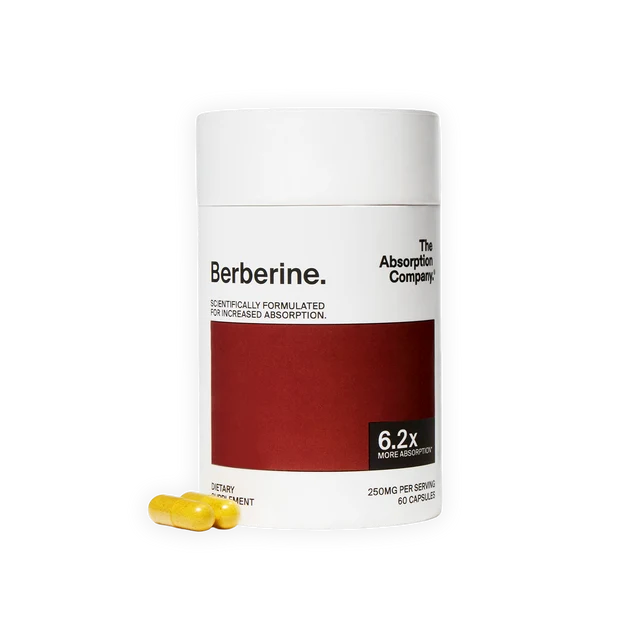
The Absorption Company's Berberine product page can be used to inspect current ingredients and product instructions if that category is relevant to your clinical conversation. Its presence here does not establish a menopause-specific benefit. Do not convert delivery claims into an equivalent medicine dose, and do not replace prescribed treatment because a product is described as natural. The strongest reason to consider a product is a defined, reviewed purpose, not a ranking position.
Read a menopause supplement ranking critically
A ranking can look precise while mixing different kinds of evidence. Ingredient studies, finished-product trials, customer reviews and a company's own absorption claims do not answer the same question. A five-star rating may reflect taste or shipping rather than changes in health. A proposed mechanism may be biologically interesting without demonstrating an outcome in menopausal participants. Ask what actually supports the specific claim you are being invited to believe.
The NIH weight-loss supplement fact sheet explains that evidence for many products is limited and that safety and interaction questions deserve attention. As you read a comparison, look for a matching population, a suitable control group, a meaningful outcome and sufficient follow-up. If a page says clinically studied ingredients, ask whether the finished formula was studied. If it promises hormone balance, ask which hormone, measured how and with what demonstrated benefit.
You can make a short evidence note for each product: purpose claimed, research actually measured, important unknowns and ongoing cost. Do not assign numerical scores to uncertainty simply to make the chart look complete. An unsupported claim belongs in the unknown column. Be particularly cautious when a product promises weight loss without meaningful changes, guarantees results on a fixed timeline or presents a supplement as equivalent to a prescription treatment. A helpful comparison should make limitations easier to see.
Turn one priority into a workable week
The weekly habit board works best when actions are small, observable and tied to a real cue. Choose one nutrition action, one movement opportunity or one appointment-related task rather than filling every day with a new obligation. An action such as prepare a portable lunch on Sunday is more concrete than improve metabolism. An action such as send my medication list before the appointment is more useful than balance hormones. Clear actions reduce the need to interpret whether you succeeded.
Build in a backup version. If cooking does not happen, what convenient meal can you assemble? If weather makes a planned walk difficult, what indoor option feels realistic? If you do not have capacity for strength training this week, can you identify an instructor or service for a later conversation? Backups are a way to account for a normal life. They should make the plan easier to use rather than add another set of tasks to fail.
At the end of the week, review what happened with curiosity. Which action fit your day? Which needed more time, support or money than expected? Would repeating it be worthwhile? You do not need a scale change to learn something useful. Keep checkmarks focused on completed actions rather than body outcomes you cannot directly command. The board is a planning aid, and its value comes from helping you make the next week more workable.
Prepare a focused conversation about the change you noticed
Bring a brief timeline, the symptoms that bother you most, current medicines and supplement labels to your appointment. Mention whether the change was sudden, whether swelling is present and whether your energy or ability to function has shifted. A clinician can consider other causes and decide whether evaluation is warranted. Do not assume every midlife symptom belongs to menopause, and do not assume a normal-looking supplement label rules out a medication or health issue.
Useful questions include: Could any medicine contribute to what I am noticing? Which symptoms should we address first? Would a dietitian or physical therapist help? Are there screening or bone-health discussions I should have at this life stage? If you are considering a supplement, ask about its purpose and the strength of the evidence for your situation. A clear question makes the appointment more useful than arriving with a shopping list of products said to fix several hormones at once.
Your body does not need to meet a marketing before-and-after standard for your concerns to deserve attention. A thoughtful plan can prioritize better sleep, more comfortable movement, reliable meals and appropriate treatment of symptoms. Those priorities may change over time. Use the map to choose what matters now and the board to make one part concrete. Supplements can be discussed within that larger picture, with their limits visible and without a promise of weight loss.
Your questions, answered.
What is the best supplement for menopause weight gain?
No supplement is established as a reliable solution for menopause weight gain. The most useful approach depends on symptoms, nutrition, activity, medicines and health history.
Does menopause always cause weight gain?
No single pattern applies to everyone. Menopause-related body composition changes can overlap with aging and other influences. A change in weight does not identify its cause.
Does berberine have menopause-specific proof?
Current evidence does not establish berberine as a dependable menopause weight-gain treatment. General metabolic research cannot automatically be transferred to menopausal populations or individual products.
Can the priority map tell me which hormone is low?
No. It organizes concerns and practical next steps. It does not interpret symptoms as hormone levels or provide a diagnosis.
Should I use hormone therapy to lose weight?
Hormone therapy is not a weight-loss treatment. Discuss its potential role for menopause symptoms, benefits and risks with a qualified clinician.
A closer look starts with a source.
Read the study or official reference behind the guide. The intervention, participants, and measured endpoint matter.
For education and everyday planning. Follow your product label and discuss individual health needs, medications, or pregnancy with a qualified clinician.