

If you have searched for ubiquinol vs CoQ10, you have probably encountered a comparison that begins with a naming problem. CoQ10 is the umbrella term for coenzyme Q10. Ubiquinol is one form of it; ubiquinone is another. A bottle labeled simply CoQ10 may contain ubiquinone, but that shopping shorthand should not turn into the claim that ubiquinone is an unusable ingredient waiting to become something useful. Both forms participate in normal biology. The more useful comparison asks what a particular product contains, how it is formulated, what its research measured, and why you are considering a supplement at all. This guide separates those questions so you can examine a label without memorizing a chemistry textbook. You will also find a practical way to compare costs and evidence without assuming that a bigger blood-level increase guarantees more energy, better fertility or a particular medical outcome.
First, put the names in the right order
Coenzyme Q10 is a naturally occurring, fat-soluble molecule that the body makes and also obtains from food. The name describes a molecular family member with a specific side chain. Within the body, that molecule changes chemical state as it accepts and donates electrons. Ubiquinone is the oxidized state. Ubiquinol is the reduced state. You may see the abbreviations CoQ10 and CoQ10H2 in more technical explanations. Those names describe chemistry, not a quality grade printed on a supplement bottle.
The shopping confusion comes from using CoQ10 as if it meant only ubiquinone. That makes the question sound like a choice between a basic nutrient and a completely separate upgrade. Instead, read the ingredient line and ask whether the manufacturer identifies ubiquinone, ubiquinol or another clearly specified ingredient description. If it does not, uncertainty remains. The front label, a capsule color and the word premium cannot resolve it.
For example, two bottles can both say CoQ10 on the front while identifying different forms in their ingredient information. Another pair can contain the same form in different oils or delivery systems. Start your comparison by writing down the actual form and serving size. This small step prevents a later absorption claim from being attached to the wrong ingredient or a different formula.
The two bottles that both belong under CoQ10
Imagine looking at one bottle labeled ubiquinol and another labeled CoQ10 with ubiquinone listed in the ingredients. The front labels make them seem like entirely different nutrients. You open the form explorer and follow the arrows in both directions. That gives you a better starting point: these are related forms in a cycle, and neither side needs to be labeled inactive to explain the difference.
You return to the bottles and write down the declared amount, capsules per serving, carrier ingredients, and storage directions. One page supplies a human formulation study, so you check which preparation it tested and what the researchers measured. You keep that evidence beside the label details rather than assuming it applies to every bottle sharing the form name. Your shortlist now has a clear explanation for any price difference worth considering. The next question is about the complete product you would buy, rather than which name sounds like a universal upgrade.
Follow the cycle instead of a one-way upgrade
A simple molecular explorer should show a loop: ubiquinone accepts electrons and becomes ubiquinol; ubiquinol donates electrons and returns toward ubiquinone. Intermediate states also occur, but a two-state overview is sufficient for understanding a consumer label. The important feature is the return arrow. The body does not use ubiquinone once, convert it into a permanently superior molecule and stop. Electron transfer depends on the molecule moving between states.
In mitochondria, CoQ10 helps carry electrons through the machinery involved in making ATP, the energy currency used by cells. The reduced form also has antioxidant activity in lipid environments. These roles belong to an organized biological system, with enzymes, membranes and other molecules doing related work. Taking a supplement is not equivalent to adding an electrical charge directly to a tired muscle. The biochemical role explains why CoQ10 is studied; it does not establish how a healthy person will feel after a capsule.
Try reading both sides of the interactive cycle before selecting a product. On the ubiquinone side, focus on accepting electrons. On the ubiquinol side, focus on donating them and antioxidant chemistry. Neither side should be labeled inactive. The clinical overview in NCBI Bookshelf describes both supplement forms and the importance of their surrounding formulation.
Absorption depends on the whole formulation
CoQ10 does not mix readily with water. The surrounding formulation therefore matters: oils, how the ingredient is dispersed, capsule design and processing can affect what reaches circulation. Ubiquinol versus ubiquinone is only one part of that picture. A dry powder capsule, a dissolved ingredient in a softgel and an engineered dispersion are different products even when their declared CoQ10 amounts match. Delivery terminology gives you questions to investigate, not a final answer by itself.
A double-blind crossover study of seven formulations tested products in 14 healthy volunteers. The results varied across formulations and individuals; the better-performing products included both a ubiquinone and a ubiquinol softgel. This is a useful reason to avoid declaring an entire chemical form ineffective. It is also a small pharmacokinetic study, so it cannot establish which retail product produces the best long-term health outcome.
When comparing a new delivery system, ask what the control product was. A formulation can perform better than one comparator without outperforming every conventional option. Ask whether the study tested the current finished product, an ingredient used within it or a laboratory model. Those are different levels of relevance. If a brand cannot provide enough detail to connect its claim to its own label, record the absorption comparison as unverified rather than filling the gap with a marketing adjective.
Read a blood-level study for what it actually measures
Pharmacokinetic research often measures blood concentrations over time. One measure describes the highest observed concentration; another summarizes exposure across a measured period. These outcomes can help researchers understand whether a formulation delivers CoQ10 into circulation. They do not automatically show where it goes within tissues, how much a person needed beforehand or whether a symptom will improve. It is possible to have a clear difference in exposure without having evidence of a meaningful difference in everyday function.
A more recent small crossover trial of a cocrystal ubiquinol formulation compared that specific product with a ubiquinone reference in 12 healthy adults under fasting conditions. Its findings apply to that comparison and study setting. They should not be converted into a universal multiplier for every ubiquinol product, or used to reduce another product's suggested serving by arithmetic. Different preparation, meals and participant characteristics can change how useful a comparison is.
Before letting a chart influence your purchase, identify its endpoint in plain language. Does it say blood level, a questionnaire, exercise performance or a diagnosed condition's clinical outcome? Then look at the number of participants and the study duration. A well-presented graph may answer a narrow question very well. Your job as a shopper is to avoid asking it to answer several broader questions that the researchers never tested.
Decide what question you want a supplement to answer
The most useful starting point is a specific purpose. Someone whose clinician recommends CoQ10 for a defined situation has a different decision from someone hoping to feel more energetic after a difficult month. Write your purpose as a sentence: I want to discuss whether CoQ10 belongs in my plan for this concern. That keeps the conversation anchored in a real question and makes it easier to recognize when a product page changes the subject to a long list of attractive possibilities.
Research in one condition does not establish a general wellness benefit in everyone. Likewise, a result in a particular fertility treatment population cannot be transferred to all people planning pregnancy. A supplement's involvement in cellular energy production does not mean that fatigue establishes a CoQ10 deficiency. Persistent or unexplained fatigue deserves assessment, especially if it changes your ability to work, exercise or manage ordinary activities.
The NCCIH CoQ10 overview explains that evidence differs across proposed uses and identifies several areas where findings are inconclusive or unsupportive. Bring the relevant question to a clinician rather than choosing whichever form has the most ambitious benefits list. A useful recommendation should connect the reason for use, the actual product and a sensible way to review whether continuing is worthwhile. No form choice can substitute for that connection.
Build a label comparison you can actually use
Compare the ingredient form, declared CoQ10 amount per serving, number of capsules per serving, other ingredients and storage instructions. Keep ingredient amount distinct from bottle size. A bottle with more capsules does not necessarily last longer if its serving requires more capsules. A delivery blend may also have a larger total weight than the CoQ10 it contains. The nutrient amount should remain identifiable without requiring you to infer a percentage from a proprietary name.
Next, check whether the company supplies meaningful quality information. An accessible certificate or independent verification may help address identity, strength or contaminants. Look at what was tested and whether the documentation applies to the product being considered. A quality test does not prove a clinical benefit, and a clinical trial does not replace routine manufacturing checks. These are useful but separate reasons to feel more confident about a product.
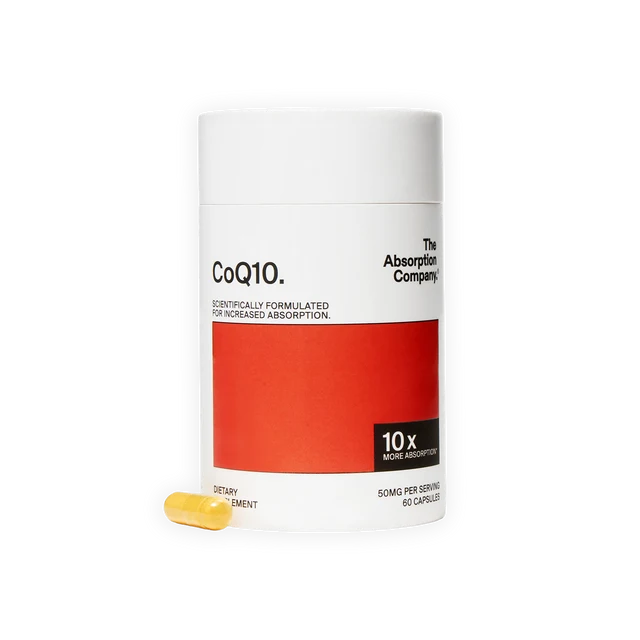
If you compare The Absorption Company's CoQ10 product, use the same checklist you would use for another brand. Review the current ingredient information and directions directly, because presentations can change. Treat brand delivery claims as claims to examine rather than a reason to skip the evidence questions. The practical goal is a transparent product you can identify, discuss and use according to its current instructions.
Compare value without inventing an absorbed dose
A straightforward cost comparison uses the current one-time or subscription price and the number of labeled servings. Keep shipping, introductory promotions and subscription commitments visible. If one price is temporary, calculate the later price too. This is more useful than dividing a price by an advertised absorption multiplier, because that calculation assumes the multiplier translates into equivalent usable dose and clinical effects. Those assumptions usually exceed what the underlying study can support.
Consider a shopper comparing an oil-based ubiquinone softgel with a more expensive ubiquinol formulation. The relevant difference may be swallowing comfort, a clinician's preference for a documented product, a dietary restriction or the availability of an applicable study. There is no need to force every difference into a single score. Write down what matters to you and leave unknowns blank. An honest blank is more informative than a made-up equivalent amount.
Think about the whole month as well as the capsule. A product that is affordable only during its first promotional shipment may not fit your plan. A format you dislike may be hard to use consistently. A clear cancellation policy and a label you can read are practical features, even though they are not biological benefits. Good value combines a sensible reason to buy with a product whose ongoing terms and evidence you understand.
Fit the label into an ordinary day
Follow the product's current directions and any instructions provided by your clinician. CoQ10 is fat soluble, and meal context can matter, but that does not mean you need to create a special high-fat meal around it. A routine should be compatible with the formulation's label and your usual eating pattern. If directions are unclear or conflict with advice you have received, ask the pharmacist or clinician reviewing your medication list to help reconcile them.
Use a cue that already happens reliably, such as preparing a particular meal or setting out the next day's essentials. Store the product as directed rather than leaving it in a hot car or a sunny window. Keep it in its original labeled container when practical so you can check the ingredient list, expiration date and lot information later. Routine design is mainly about making the intended instructions easy to remember and verify.
Avoid changing several supplements at once while also changing your meal schedule and training plan. If something feels different, too many simultaneous changes make interpretation difficult. A short note about when you started, which product you used and any unwanted effects can be useful at follow-up. It is not a scientific trial and cannot establish that the supplement caused an improvement, but it can make your next conversation clearer and more specific.
Review medicines before choosing either form
Natural occurrence in the body does not make a concentrated supplement appropriate for every situation. CoQ10 can interact with medicines; warfarin is a particularly important example to raise with the prescribing team. Diabetes treatment and cancer treatment also warrant an explicit review. Choosing ubiquinol rather than ubiquinone does not remove the need to check interactions. The relevant question is the complete product in the context of your treatment, not whether its ingredient name sounds more familiar.
Share a photo of the front label, Supplement Facts and other ingredients rather than saying only that you take an antioxidant. Combination products can add ingredients the clinician did not expect. Include supplements, nonprescription medicines and planned procedures in the conversation. If you are pregnant, breastfeeding or considering a supplement for a child, seek advice rather than extrapolating from studies in healthy adults. Those studies may not answer the safety question that matters in your situation.
Digestive upset and sleep disturbance are among the unwanted effects described in the NCCIH safety information. Do not assume a premium formulation cannot cause discomfort. If a new symptom appears after starting a product, contact an appropriate health professional and explain the timing. Keep prescribed treatments unchanged unless the prescribing team advises otherwise. A shopping guide can help you prepare information; it cannot select a personal dose or replace a medication review.
Make a form choice with a clear reason
Once the names are clear, the difference between ubiquinol and CoQ10 becomes a more manageable decision. You are choosing among products containing different states of the same biological molecule, often with substantially different formulations. Start with a reason for use, then identify the ingredient, assess product-specific evidence, review safety and compare ongoing cost. A confident choice may be a particular formulation, a question for a clinician or a decision to wait because your original goal is still unclear.
Use the molecular cycle explorer to test your understanding rather than to score your health. Can you explain why the arrow goes in both directions? Can you distinguish a reduced chemical state from a proven superior clinical result? Can you tell whether a study compared chemical forms or finished formulations that differed in several ways? If those distinctions make sense, you already have a stronger foundation than a simple premium-versus-basic ranking provides.
Before checking out, save the product information you actually reviewed. A screenshot of the label and the study link is more useful than remembering an impressive number from an advertisement. If a clinician suggested supplementation, ask what would make them recommend continuing or reconsidering it. The aim is not to win a chemistry debate. It is to make a purchase whose purpose, limitations and practical details remain understandable after the marketing language has faded.
Your questions, answered.
Is ubiquinol the same as CoQ10?
Ubiquinol is the reduced form of coenzyme Q10. Ubiquinone is its oxidized form. CoQ10 is the broader term, although retail labels sometimes use it as shorthand for ubiquinone.
Is ubiquinone inactive?
No. Ubiquinone and ubiquinol interconvert and participate in normal electron-transfer chemistry. Describing ubiquinone as unusable is misleading.
Does everyone over a certain age need ubiquinol?
An age cutoff alone does not establish a need or a universally superior product. Purpose, formulation, evidence, medicines and individual circumstances matter.
Does better absorption guarantee better results?
No. Higher blood exposure is a pharmacokinetic finding. A specific health benefit requires evidence measuring that outcome.
Can I substitute a lower serving of one form for another?
Do not calculate personal dose equivalence from marketing claims. Follow the current label and discuss intended substitutions with your clinician or pharmacist.
A closer look starts with a source.
Read the study or official reference behind the guide. The intervention, participants, and measured endpoint matter.
For education and everyday planning. Follow your product label and discuss individual health needs, medications, or pregnancy with a qualified clinician.