

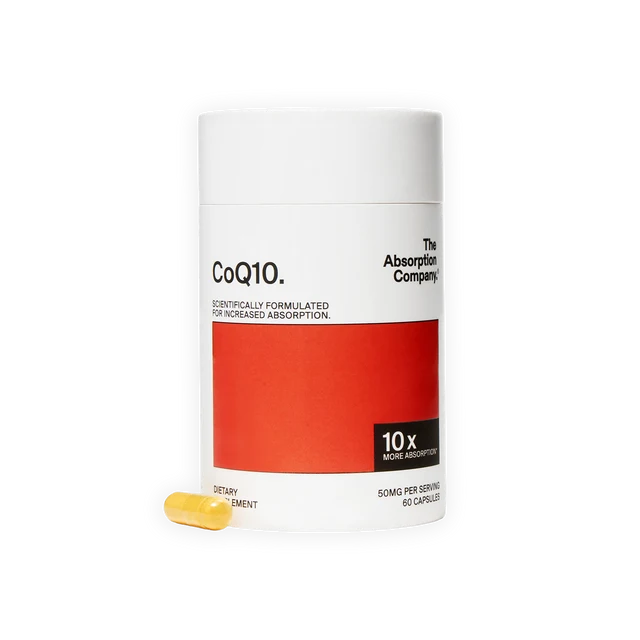
If you are deciding when to take CoQ10 morning or night, the most useful starting point is the bottle in your hand. Different formulations have different directions, and a routine that fits one person's breakfast may not fit another person's late shift. A precise alarm time can feel reassuring, but it does not establish that a supplement will improve energy, exercise recovery, or any medical condition. This guide helps you separate three questions: whether CoQ10 is appropriate for you, how to follow the particular product's instructions, and where those instructions fit into your day. Use the timeline as a practical organizer once the first two questions are settled, then make the routine simple enough to remember on an ordinary busy day.
What timing can—and cannot—tell you
CoQ10 is a compound your body makes and uses in cellular energy production. Its role in normal biology is one reason supplements attract interest, but that role does not mean a capsule acts like coffee. Taking it before a meeting or workout does not establish that you will feel a same-day boost. Likewise, taking it at night is not a proven shortcut to overnight recovery. It helps to approach timing as a question about correct use and a manageable routine rather than a way to switch a particular benefit on.
The National Center for Complementary and Integrative Health's CoQ10 overview describes important gaps in clinical evidence across several uses. It does not identify a universal morning or evening advantage. A study showing a change in blood CoQ10 after a formulation is swallowed also answers a different question from a study comparing health outcomes between breakfast and dinner schedules. Before following a timing claim, ask which of those questions was actually tested.
A useful goal is therefore modest and concrete: follow the label, avoid conflicts with an existing treatment plan, and choose an anchor you can repeat. A routine can improve organization even when no particular hour has been shown to improve a clinical outcome.
Breakfast changes; dinner usually stays put
Imagine that breakfast happens at home some mornings and on the train on others. You have been setting an early CoQ10 reminder, but it often arrives before you have checked the bottle or decided when to eat. You want a simpler plan, and your first step is to read the meal instructions on the product you actually have.
In the timeline, compare breakfast with dinner as possible anchors. Add the label wording beside each option rather than assuming either meal is automatically suitable. If the directions permit the dinner option, it may be easier to organize around an event that already happens consistently. If they do not, keep looking for an anchor that fits them.
Before choosing, add a weekend note and a question about missed servings. Your result is an understandable routine to follow and review, rather than a claim that dinner increases absorption or that an earlier alarm delivers more energy.
Read the directions before choosing the hour
Start with the serving size and the directions for use. These are related but distinct details. Serving size tells you what quantity the Supplement Facts panel describes; directions tell you how the manufacturer intends the product to be used. A front label may emphasize a large number while the panel explains that the amount belongs to several capsules. Write down the exact product name and version so your timeline does not accidentally combine directions from a previous bottle with a new formula.
Next, look for wording about food, frequency, storage, and any warnings. Do not assume every CoQ10 product has the same meal requirement simply because the ingredient name matches. A softgel, powder, chewable, and specialized delivery system may be formulated differently. If the printed bottle and the website disagree, contact the manufacturer or ask a pharmacist before choosing between them. A planner should preserve the verified directions rather than settle the disagreement itself.
Keep the amount field separate from the time field. Moving an existing label-directed serving to a convenient anchor is an organizational task; deciding to add another serving is a different decision. If a clinician has given you instructions that differ from a general website, ask that clinician how to reconcile them with your current product.
Use a meal as an anchor when the label calls for it
CoQ10 is fat soluble, so its behavior in the digestive tract differs from that of a freely water-soluble ingredient. Food and the way a formulation disperses can matter to absorption. However, that does not translate into a universal instruction to eat a high-fat meal or add oil to every serving. Follow the directions for the exact product and ask for clarification when the manufacturer makes a food-independent absorption claim without clearly explaining how to use the product.
For a product taken with food, an ordinary meal is a practical reminder. Someone who always eats breakfast at home might pair the label-directed serving with breakfast cleanup. Someone who only drinks coffee before leaving may find lunch more dependable. The point is not to redesign a meal around a supplement. It is to identify an existing, repeatable eating occasion that satisfies the directions and does not make the routine more complicated than it needs to be.
Be careful with the phrase 'empty stomach.' It is not interchangeable with 'morning,' and neither phrase should be inferred from advertising about cellular energy. If a product has a specific food instruction, record it beside the timeline anchor. That small note is more informative than a clock icon alone, especially when weekends, travel, or work shifts move your meals.
When a morning routine is practical
Morning can be convenient when it already contains a reliable sequence: prepare breakfast, eat, put dishes away, and leave for the day. An existing sequence provides a clear place for a label-directed supplement. A reminder might say 'check CoQ10 directions with breakfast' instead of simply 'take at 7.' The first message preserves the meal context when breakfast runs late; the second can become detached from the instructions it was meant to support.
A morning preference also leaves room to notice whether sleep changes after starting a product. NCCIH lists insomnia among possible mild adverse effects of CoQ10. That does not mean everyone experiences it, or that a morning serving prevents it. It does mean sleep is a reasonable topic to discuss if you notice a pattern. Record the timing and the change rather than treating a few difficult nights as proof of a particular mechanism.
Morning is less useful if it is consistently rushed, if the bottle is forgotten after leaving home, or if the required meal rarely happens. In that case, choosing morning because it sounds more energetic can create a fragile habit. Pick the anchor you actually have, then check its compatibility with the product instructions and your other medicines.
When an evening anchor may fit better
Dinner may be the most predictable meal in a household. If the label permits it and your healthcare professional has not advised otherwise, an evening meal can be a practical place to organize a serving. This may suit someone who eats breakfast on the move or works an early shift. It does not imply that the body reserves a special nighttime window for the supplement or that evening use produces superior recovery.
Keep dinner and bedtime separate in the planner. They can be several hours apart, and a direction involving food should not quietly become an instruction to take something after brushing your teeth. If dinner varies, use the event itself as the reminder and put the bottle in a suitable, safe location associated with the routine. Maintain the storage conditions on the label rather than leaving supplements somewhere hot or damp for convenience.
If you notice sleep disruption or digestive discomfort, avoid repeatedly changing several things at once. Note when the supplement was taken, whether it was taken as directed, and what happened. A pharmacist or clinician can help you decide whether timing, the formulation, another ingredient, or stopping the product deserves consideration. A timeline cannot establish the cause of a symptom.
Adapt the plan to shifts, weekends, and travel
Clock time becomes less helpful when your day does not follow a standard office schedule. For a night-shift worker, 8 a.m. may be the end of the waking day. Labels that specify a meal or a daily frequency are better represented by those instructions than by a universal sunrise rule. Choose an anchor that exists in your own schedule, and ask a healthcare professional if an irregular routine creates uncertainty about spacing or interactions.
A weekend version should preserve the instructions while allowing the event to move. For example, 'with my first reliable meal, if consistent with the label' is more adaptable than an alarm that always fires before you wake up. This example describes a planning method, not a recommendation that everybody use their first meal. The correct anchor still depends on the product and any individualized directions you have already received.
Before travel, photograph the label and keep the product in appropriate packaging. Check storage requirements and how a change in time zone affects any clinician-directed schedule. Do not use a travel disruption as a reason to add servings. When you are unsure what to do after a missed serving, consult the label or a pharmacist instead of improvising a catch-up schedule.
Understand formulation without chasing an absorption score
CoQ10 products differ in ingredient form, carrier ingredients, and how the ingredient is dispersed. Human research has investigated those differences. A small crossover study of seven formulations found that carrier lipids and solubilization affected measured bioavailability. That supports looking beyond the ingredient name. It does not prove that every product using a similar technology will produce the same result, or that a higher blood measurement guarantees a larger everyday benefit.
When a label says liposomal, nanoemulsified, ubiquinol, or ubiquinone, treat that as the beginning of the comparison. Ask whether the manufacturer supplies human research on the exact formulation, what comparator was used, and which endpoint was measured. A single-serving pharmacokinetic study can provide useful information about exposure while leaving long-term effectiveness, tolerability, and the ideal time of day unanswered. Those are separate questions requiring their own evidence.
Avoid translating an absorption multiplier into a personal dose conversion. Products cannot safely be equated by multiplying a label amount by an advertising number. Also avoid a universal percentage for how much of all supplements the body absorbs: absorption depends on the nutrient, formulation, study method, and person. Use the verified label quantity and discuss any intended change with a qualified professional.
Resolve medicine questions before arranging the timeline
The most convenient time is not automatically an appropriate time when medicines are involved. NCCIH notes potential interactions with warfarin, insulin, and some cancer treatments. These concerns cannot be resolved by placing two items a few hours apart on a visual planner. The relevant question is whether CoQ10 belongs in the treatment plan at all and, if it does, what monitoring or instructions the prescribing team considers necessary.
Bring a complete list to a pharmacist or clinician: prescription medicines, over-the-counter medicines, multivitamins, powders, and other supplements. Include products taken occasionally. A photo of the Supplement Facts and Other Ingredients panels is often more useful than a brand name alone because combined products may contain CoQ10 alongside several additional ingredients. Mention pregnancy, breastfeeding, planned procedures, and significant health conditions when seeking product-specific guidance.
If you are researching CoQ10 because of symptoms while taking a statin, keep that conversation separate from a routine experiment. Do not stop or alter a prescribed medicine based on a supplement article. Describe the symptoms, timing, and products to your prescriber so they can evaluate possible causes and options. Organizing a supplement should support that conversation rather than substitute for it.
Track useful observations without turning the day into a trial
A short record can show whether your chosen anchor is workable. Useful entries include whether you followed the label, the meal or event used as a reminder, any missed serving, and any new discomfort. If sleep is your concern, record approximate bedtime and whether the problem was difficulty falling asleep or waking during the night. These details are more actionable than a single unexplained score labeled 'energy.'
Keep interpretation cautious. Busy weeks, caffeine, exercise, illness, alcohol, and changes in sleep can all affect how you feel. If several things change together, a diary will not identify which caused an improvement or problem. Avoid reading normal day-to-day variation as evidence that one hour dramatically increases absorption. Your record is a memory aid that can help a professional ask better questions; it is not a controlled study.
Set a review point for the routine rather than a deadline for promised results. At that point, ask whether the reminder fits, whether the directions were clear, and whether any concern needs follow-up. Continuing indefinitely because an app shows a streak is not a health outcome. The routine should remain useful, understandable, and compatible with the reason you started the product.
Build your daily CoQ10 timeline
Use the interactive timeline to name an anchor, enter the product's verified directions, and add a reminder that includes any meal instruction. Begin with the routine you actually follow on most days. If breakfast varies but lunch is stable, reflect that in the plan instead of choosing the earliest available slot. The tool should help you see the day clearly, without suggesting that an attractive schedule proves a medical advantage.
Next, add a short exception note for weekends, travel, or a missed serving. A useful note might be 'check the label or ask my pharmacist if I miss it.' Avoid writing your own doubling rule. If your healthcare professional has given you specific instructions, copy those accurately rather than simplifying away the detail. Keep a separate question list for anything unresolved; uncertainty should stay visible until somebody qualified answers it.
Finally, review whether the plan is easy to explain in one sentence. 'I follow my current label and use dinner as my reminder' is clear. A complicated sequence built around unverified absorption windows is harder to maintain and harder to discuss with a clinician. The best output from the planner is a practical record of an appropriate routine, not a ranking of morning against night.
Where The Absorption Company's CoQ10 fits
If you are considering The Absorption Company's CoQ10, use its current product page to review the format, Supplement Facts, other ingredients, and available research before building the routine. Confirm the directions on the product you receive. Product pages and offers can change, so an older article or screenshot should not be the only source for instructions, package size, or price.
For a careful comparison, place label amount, servings per container, food directions, and total cost alongside the formulation information. Then examine what the supporting research can actually establish. A formulation study is useful in its own scope, while claims about fertility, fatigue, recovery, or other outcomes need evidence relevant to those outcomes and populations. A delivery technology name alone does not answer whether a product suits your circumstances.
You can now return to the morning-or-night question with a more useful standard: the right routine follows the actual directions, survives your normal schedule, and leaves room for professional advice when medicines or symptoms are involved. Choose the product first on relevant evidence and suitability, then use the timeline to make its use understandable. Convenience matters because it makes correct instructions easier to follow, not because one universal hour unlocks CoQ10.
Your questions, answered.
Is CoQ10 better in the morning or at night?
No universal advantage is established. Follow your product's directions and choose a reliable anchor, with professional guidance if medicines or side effects are involved.
Should I take CoQ10 with food?
Food can matter to absorption, but formulations differ. Use the directions for your exact product rather than assuming every CoQ10 supplement has identical meal instructions.
Can CoQ10 affect sleep?
NCCIH lists insomnia as a possible mild side effect. Record any change and discuss it with a healthcare professional instead of assuming timing alone explains it.
Can the routine planner choose my dose?
No. It organizes directions you already have. It does not calculate amounts, recommend extra servings, or resolve drug interactions.
What should I do if I miss a serving?
Check the label or ask a pharmacist. Do not create your own catch-up or doubling schedule.
Does better absorption guarantee that I will feel more energetic?
No. Absorption measurements and everyday health outcomes are different endpoints. Evidence for a formulation does not automatically establish a noticeable benefit for every user.
A closer look starts with a source.
Read the study or official reference behind the guide. The intervention, participants, and measured endpoint matter.
For education and everyday planning. Follow your product label and discuss individual health needs, medications, or pregnancy with a qualified clinician.