Many people researching ozempic hair loss are surprised to learn the medication is not classified as a direct cause. Current research has not established a causal link between Ozempic and hair loss the way it has for more commonly reported effects, such as nausea or reduced appetite.
Some people do report increased shedding while using Ozempic or similar medications. Researchers believe this is closely tied to the weight loss process itself rather than the drug acting on hair follicles. When the body undergoes rapid weight loss, the hair growth cycle can be temporarily disrupted, pushing more hairs than usual into the shedding phase. This type of ozempic hair loss often surfaces weeks or months after weight loss begins, which is part of why the connection can feel confusing at first.
The distinction matters, because understanding the real cause is what points you toward what you can do about it.
Why Weight Loss May Be The Real Cause Of Increased Shedding
Although many people connect semaglutide hair loss to the medication, the weight loss process is likely the more significant driver. Losing weight quickly places temporary physical stress on the body. Hair growth requires a consistent supply of both energy and nutrients to maintain its normal cycle. During calorie restriction, the body deprioritizes hair growth in favor of more essential functions, pushing more follicles into the resting and shedding phase.
The faster the weight loss occurs, the more noticeable this response tends to become. The deeper issue, though, is that even when people are eating as well as they can, the body may not be absorbing the nutrients it does receive. Absorption is where most supplement routines break down, and rapid weight loss makes that gap even harder to close.
Signs Your Hair Loss May Be Related To Weight Loss
Ozempic hair thinning and weight-loss-related hair shedding share recognizable patterns. For those who have recently lost a significant amount of weight, these signs may indicate that the shedding is connected to the weight loss process rather than another underlying cause.
- Hair shedding began several weeks or months after noticeable weight loss.
- Hair appears thinner across the scalp rather than in isolated patches.
- More hair than usual is collecting in your brush, shower drain, or on clothing.
- The shedding started around the same time as major changes in eating habits or calorie intake.
- You have also experienced other changes associated with rapid weight loss, such as reduced appetite or increased fatigue.
Experiencing Ozempic hair thinning can be frustrating, but identifying the timing and pattern of hair loss may provide helpful clues about what is contributing to the issue.
What To Focus On If You're Concerned About Hair Health
For those researching how to stop hair loss from ozempic, the most direct approach focuses on what you can control: hydration, nutrient intake, and patience. None of these are instant fixes, but together they create the internal environment your body needs to recover.
Hydration
Proper hydration matters even more when appetite changes are affecting daily fluid intake. Reduced hunger on Ozempic often means reduced drinking, and even mild dehydration compromises cellular function across the board.
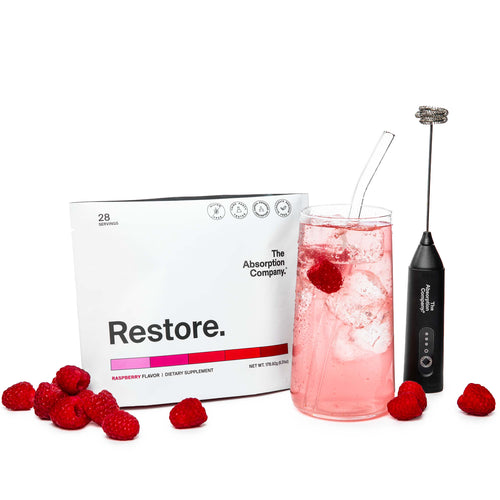
Our Restore foundational support delivers full-spectrum electrolytes, including magnesium, potassium, sodium, and liposomal Vitamin C, formulated to absorb rather than pass through. Most hydration supplements deliver nutrients in forms the body cannot fully use. Ours are built around the science of what actually reaches your bloodstream.
Nutrient Intake
Calorie restriction during weight loss creates gaps in the nutrients your hair follicles depend on, including B vitamins, Vitamin D, biotin, and iron. Biotin deficiency is clinically associated with hair thinning, and deficiencies in B12 and folate are linked to changes in hair, skin, and nails.
Getting these nutrients through formulas designed for actual absorption closes the gap that standard supplements leave open. Our WLP1 oral GLP-1 support is built on pharmaceutical-grade delivery science shown in human testing to increase bioavailability up to 20x, because more absorption means more of what your body needs.
Consistency And Patience
Hair growth operates in cycles, and recovery takes time. Many cases of weight-loss-related shedding resolve as the body adjusts and nutrient levels stabilize. The goal is not to force a quick fix. The goal is to create a consistently nourishing environment so the hair growth cycle can return to its normal rhythm on its own timeline.
How to Support Your Body Through Weight Loss Changes with High-Quality Supplements
Significant weight loss is a real metabolic event. For people asking whether hair loss is a side effect of ozempic or something tied more directly to the weight loss process, the research consistently points toward the latter. The more important question is whether your body is adequately resourced to handle the demands of that process.
Only about 16% of nutrients from standard supplements are absorbed. When your body is already under the demands of rapid weight loss, that number becomes even more consequential.
Our GLP-1 support stack was built specifically for this moment. Combining electrolyte hydration with pharmaceutical-grade Vitamin D3 and K2, and formulated around the science of absorption, it gives your body the raw materials to function at its best through the entire weight loss journey.
Disclaimer:
The information provided in this article is for general informational and educational purposes only and is not a substitute for professional medical advice, diagnosis, or treatment. Always seek the guidance of your physician or other qualified health provider with any questions you may have regarding your health or a medical condition. Never disregard or delay seeking professional medical advice because of something you have read here.
FDA Disclaimer:
These statements have not been evaluated by the Food and Drug Administration. The products are not intended to diagnose, treat, cure, or prevent any disease.