That heavy, foggy feeling that hits in the middle of the day is often dehydration hiding in plain sight. When people search for how to rehydrate fast, they usually think about extreme thirst, but the real issue starts inside your cells. Energy drops, blood volume decreases, and oxygen delivery becomes less efficient, which is why everything suddenly feels harder than it should.
Cells function like tiny water-filled batteries, relying on fluid and electrolytes for hydration to produce energy and send signals. Sodium pulls water into the bloodstream, potassium guides it into your cells, and magnesium supports muscle relaxation and nerve communication. When those minerals fall short, headaches, fatigue, dizziness, and muscle tightness follow. You feel it in your workout. You feel it at your desk. You feel it in the quality of your sleep.
Here is the part most people miss: hydration only works if your body can absorb what you drink. Poor absorption means fluids and minerals may pass through your system without fully restoring you, leaving you depleted.
How The Absorption Company's Capsoil® Technology Makes Hydration Work
Most supplements are broken down by stomach acid and digestive enzymes before they ever reach your bloodstream. Capsoil® nanotechnology was built to solve that. The process reduces nutrient particles and wraps each one in a protective lipid layer.
That lipid shell acts as a shield through the digestive tract, keeping the nutrient intact until it reaches the optimal absorption site in the small intestine. Once there, the nutrients cross into the bloodstream efficiently and get to work. The result is up to 800% more absorption compared to standard delivery methods, so what you take actually reaches the cells that need it.
Why Water Alone Won't Cut It: The Fastest Way To Rehydrate
Chugging a giant bottle of water seems like the fastest way to rehydrate, right? It feels productive in the moment, but if you have ever noticed it running straight through you, that is your clue that water alone is not the full answer. The fastest way to rehydrate is not about volume but about absorption and mineral balance.
Water needs electrolytes to actually move and stay in your cells. Without enough sodium, potassium, and magnesium, fluid cannot properly cross cell membranes, which means you might drink plenty and still feel off. This is why an oral rehydration solution or properly formulated rehydration salts can work more efficiently than plain water, especially when you are trying to rehydrate after dehydration from heat, travel, intense training, or alcohol.
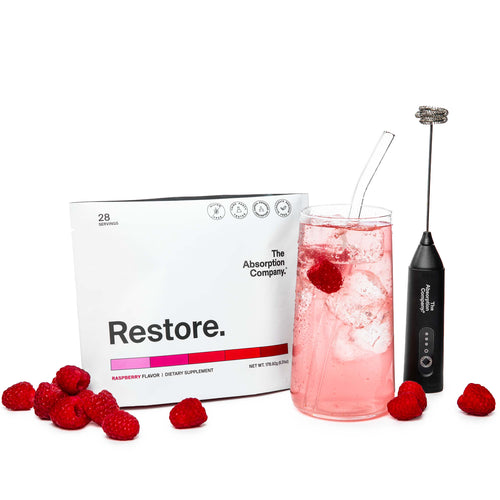
Now here is where quality matters. Many hydration products rely on basic mineral forms that are inexpensive and easy to dissolve, but not optimized for uptake in the body. At The Absorption Company, our Restore formula is designed with advanced delivery technology measured in nanometers to improve how nutrients move through the digestive barrier, making it a strong contender for the best hydration powder if you care about actually feeling the difference.
When fluids and minerals are absorbed efficiently, hydration feels steady and noticeable instead of temporary and incomplete.
How To Rehydrate Quickly After A Workout, Heat Exposure, Or Alcohol
Hard workouts, long days in the sun, and even a few drinks at dinner can drain your system faster than you realize. For example, sweat pulls out fluids and minerals, alcohol increases fluid loss, and heat accelerates the whole process. If you are trying to figure out how to effectively rehydrate, here is what actually works:
Rehydrate After Workouts
An intense session leaves you breathing hard and sweating out more than just water. You are losing sodium, potassium, and magnesium, which are essential electrolytes for muscle function. To properly rehydrate after a workout, combine fluids with a well-formulated electrolyte source so water can move back into your cells and restore strength instead of just diluting your bloodstream.
Rehydrate After Heat Exposure
Spending hours in the sun increases sweat rate and strains your cardiovascular system. You may notice fatigue, headaches, or feeling lightheaded when standing up, all early signs that you need to rehydrate after dehydration. The fastest way to rehydrate includes fluids plus balanced minerals so circulation stabilizes and your body temperature can be regulated more efficiently.
Rehydrate After Alcohol
Alcohol acts as a diuretic, meaning it increases urine output and pulls water and minerals out of your body. That dry mouth and pounding head the next morning are signs your electrolyte balance has shifted. If you want to rehydrate quickly after drinking, focus on fluids paired with electrolytes so you replenish what was lost instead of just adding more water to an already depleted system.
What To Drink When Dehydrated From Illness Or Diarrhea
Stomach bugs and digestive issues can deplete you fast and leave you feeling weak, shaky, and foggy. Fluid loss during illness is not just uncomfortable; it can disrupt electrolyte balance quickly. If you are wondering what to drink when dehydrated from sickness, here is how to approach it strategically.
Oral Rehydration Solution And Rehydration Salts
When you need to rehydrate after diarrhea, water alone will not replace the sodium and glucose lost through fluid loss. A properly balanced rehydration solution or quality salts help your body absorb fluid more efficiently by using glucose and sodium together to pull water across the intestinal lining. This process supports faster cellular hydration and is often the safest and most effective first step during acute dehydration.
A Simple, Homemade Electrolyte Drink
A simple homemade electrolyte drink can help if commercial options are not available. Combining clean water with a small amount of sea salt and a natural carbohydrate source can support absorption by mimicking the structure of a rehydration solution. The key is balance, because too much sugar can worsen digestive distress and slow gastric emptying.
Focus On Absorption During Recovery With The Absorption Company
Illness can temporarily weaken digestion, making absorption even more critical. Poorly absorbed minerals will not fully restore you. The fastest way to rehydrate during recovery includes highly bioavailable electrolytes for hydration. Restore from The Absorption Company is formulated with advanced delivery technology measured in nanometers to raise how nutrients cross the digestive barrier, helping you rehydrate after dehydration more effectively and regain steady energy.
Magnesium glycinate plays a specific role in absorption. Magnesium maintains electrolyte balance, supports nerve conduction, and aids muscle recovery, all of which take a hit during illness-related fluid loss. Our Magnesium Glycinate uses the Chelamax® chelated and Capsoil® liposomal dual-delivery system, achieving lab-verified absorption that standard forms cannot match.
How To Rehydrate Fast Without Sugar Overload: What To Know Before You Buy
Sports drinks are everywhere, and they promise quick hydration and recovery. The problem is that many are loaded with sugar and use low quality mineral forms that do little for real cellular replenishment. If your goal is how to rehydrate fast in a way that actually supports performance and long term health, here is what to pay attention to:
Watch The Sugar Content
High sugar content may taste good, but it can slow gastric emptying and leave you feeling bloated. Excess sugar can also spike blood glucose, followed by a crash that makes fatigue worse instead of better. For effective electrolytes consumption, you want balanced carbohydrates in amounts that support absorption, not overwhelm your system.
Avoid Low Quality Mineral Forms
Many brands use magnesium citrate because it is inexpensive and dissolves easily in water. It looks good on a label and mixes smoothly, but the trade-off is lower quality and less efficient absorption for the consumer. If you are serious about recovery and looking for high absorption magnesium or even the best magnesium glycinate, the form and delivery system matter just as much as the dose.
Additionally, magnesium plays a direct role in muscle relaxation, nerve signaling, and fluid balance, and low levels can even contribute to low vitamin D status since magnesium is required to activate vitamin D in the body. If magnesium is poorly absorbed, you may still experience cramps, poor sleep, and lingering fatigue despite supplementation. Choosing higher quality forms designed for better uptake helps your body actually use what you are taking.
Most Hydration Drinks Are Loading You Up With Sodium. Ours Doesn't.
Check the label on most popular hydration drinks and you will find sodium levels pushing 1,000mg or more per serving. That amount of sodium may prompt your body to retain water, leaving you feeling puffy and bloated instead of refreshed. Restore is formulated with enough to support fluid retention and proper electrolyte balance, but not so much that it works against you. Sodium is a necessary part of effective rehydration, but the amount matters. We calibrated ours to work with your body's natural fluid regulation, so you rehydrate without the uncomfortable fullness that follows most sports drinks.
Choose A Formula Built Around Absorption
Hydration is about getting those fluids and minerals into your cells. Our Restore formula is crafted with advanced delivery technology measured in nanometers and pharmaceutical-grade ingredients, positioning it as a strong candidate for the best hydration powder for adults.
What You Should Know Before Buying Our Hydration Products
The Absorption Company is the only supplement brand singularly dedicated to solving the problem of nutrient absorption. Every formula, including Restore, is pharmaceutical-grade and scientifically built to raise how much of each nutrient your body actually uses. Before purchasing, here is what sets us apart:
- Advanced advanced liposomal delivery technology: Capsoil® liposomal technology reduces particle size, wrapping nutrients in a protective lipid layer so they pass through digestion and into the bloodstream.
- Third-party tested for purity and absorption: Every formula is tested for 20-plus substances, gluten-free, non-GMO, and made in an FDA-registered, cGMP, and NSF-certified facility in the USA.
- 84% of nutrients go unabsorbed in standard supplements: We formulate specifically to close that gap so you actually get the benefits of the nutrients you take.
- No marketing fluff, no filler claims. We publish the data, and the results speak for themselves.
Build Your Hydration Around Absorption, Not Just Ingredients
Hydration is about getting fluids and minerals into your cells, not just replacing volume. The fastest way to rehydrate includes electrolytes. Restore from The Absorption Company is formulated with advanced delivery technology measured in nanometers and pharmaceutical-grade ingredients, making it a strong candidate for the best hydration powder for adults who care about performance, recovery, and actually feeling the difference.
Sources:
- Aghsaeifard, Z., Heidari, G., & Alizadeh, R. (2022). Understanding the use of oral rehydration therapy: A narrative review from clinical practice to main recommendations. Health Science Reports, 5(5). https://doi.org/10.1002/hsr2.827
- Meixner, M. (2018). Electrolyte Water: Benefits and Myths. Healthline. https://www.healthline.com/nutrition/electrolyte-water
- Liska, D., Mah, E., Brisbois, T., Barrios, P. L., Baker, L. B., & Spriet, L. L. (2019). Narrative Review of Hydration and Selected Health Outcomes in the General Population. Nutrients, 11(1), 70. https://doi.org/10.3390/nu11010070
Disclaimer:
The information provided in this article is for general informational and educational purposes only and is not a substitute for professional medical advice, diagnosis, or treatment. Always seek the guidance of your physician or other qualified health provider with any questions you may have regarding your health or a medical condition. Never disregard or delay seeking professional medical advice because of something you have read here.
FDA Disclaimer:
These statements have not been evaluated by the Food and Drug Administration. The products are not intended to diagnose, treat, cure, or prevent any disease.